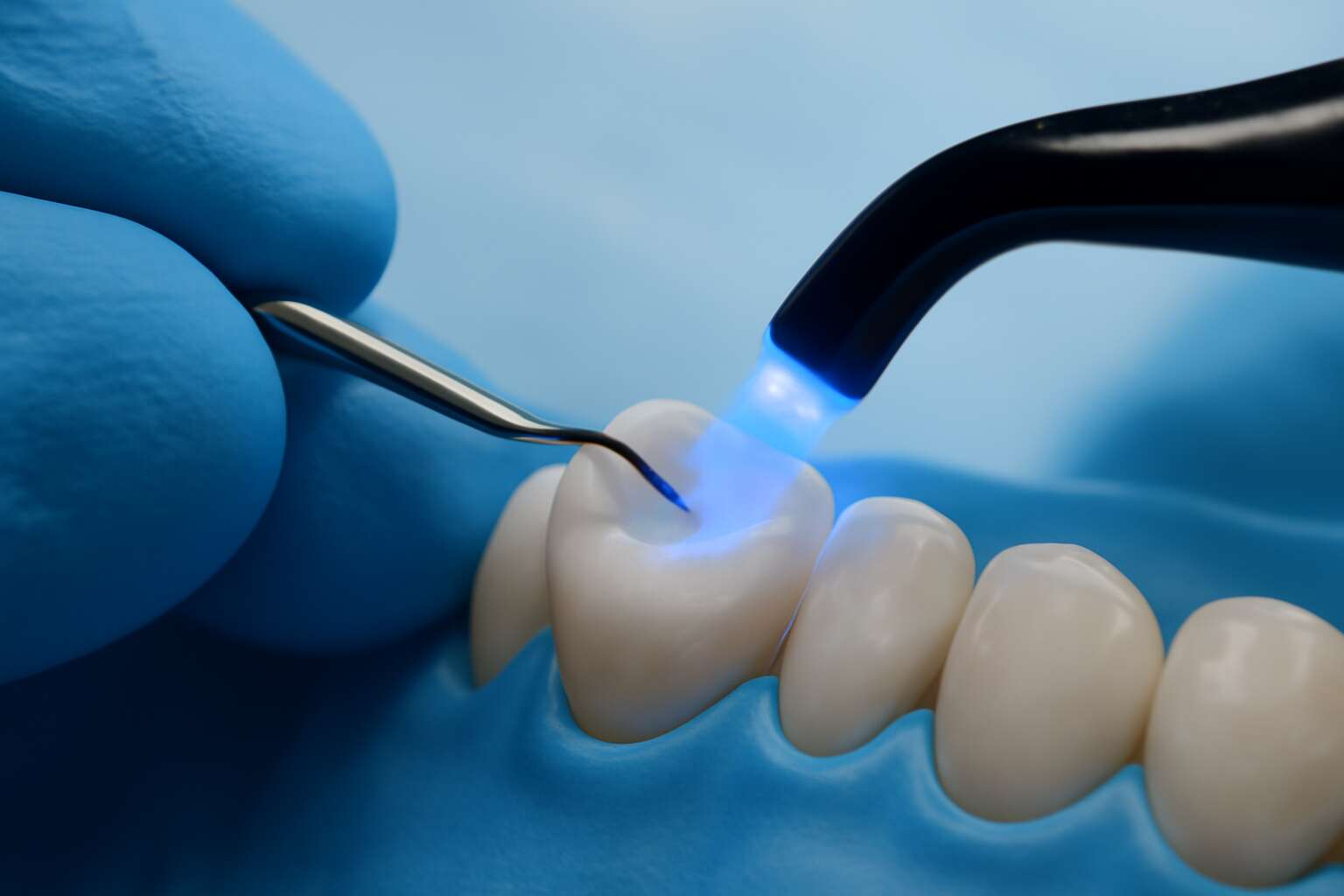
Foundations of polymers in dentistry
Chemical structure and properties of dental polymers
Foundations of polymers in dentistry rest on simple chains and smart cross-links. In South Africa’s clinics, these materials underpin fillings, adhesives, and denture bases, quietly shaping smiles. A striking stat: over 70% of restorations rely on polymers, steering outcomes from Cape Town to Limpopo. Monomers link into resilient networks, giving clinicians a versatile toolkit.
Chemical structure and properties of dental polymers hinge on network architecture: long chains, strategic cross-links, and, occasionally, reinforcing fillers that boost stiffness without dulling polish. Typical matrices such as Bis-GMA or UDMA cure via light or chemical means, striking a balance between strength, wear resistance, and aesthetics.
- Cross-link density and network stability
- Biocompatibility and low shrinkage
- Polymerization method flexibility (light- vs self-curing)
These properties yield durable, natural-looking restorations and reliable adhesives—a bit of chemistry magic. They support patient comfort and long-term performance, even under busy South African schedules and the climate quirks that tax resin stability.
History and evolution of polymer use in dentistry
Smiles are stitched with science. Today, more than 70% of restorations rely on polymers, quietly driving durability and beauty from Cape Town to the Karoo. The tale begins with simple acrylics that, in the 1930s, opened a new era for denture bases and patient comfort.
From those humble beginnings, dentistry witnessed a metamorphosis: the rise of resin-based composites in the 1960s, the birth of Bis-GMA and UDMA, and the shift from self-cure to light-cured systems. Each leap refined handling, shade matching, and integration with enamel, while guarding against shrinkage and wear.
- 1930s: PMMA denture bases revolutionize removable prosthetics.
- 1960s–70s: resin-based composites expand conservative restorations.
- 1980s: Bis-GMA and advanced dimethacrylates improve aesthetics and strength.
- 1990s–2000s: light-curing, nanofillers, and durable interfaces elevate polish.
This arc continues to shape patient comfort and long-term performance across South Africa, a testament to polymers in dentistry.
Classification schemes for dental polymers
More than 70% of restorations rely on polymers in dentistry, quietly shaping durability and aesthetics from Cape Town to the Karoo. Foundations of the field rest on clear ideas: how long a chain holds its shape, how tightly it networks, and how it interfaces with tooth tissue.
Classification schemes for dental polymers map this complexity and guide daily practice.
- Origin: synthetic vs natural
- Architecture: linear, crosslinked, or network polymers
- Polymerization: addition (chain-growth) vs condensation
- Application: restorative resins, adhesives, denture bases, luting cements
In practical terms, the taxonomy often follows origin, architecture, polymerization, and application. This living framework informs bonding, wear resistance, and polish.
In South Africa, such schemes help professionals anticipate performance across diverse climates and patient needs; materials and methods become evolving partnerships between science, craft, and care.
Key terminology in dental polymer science
Foundations of polymers in dentistry unfold like a delicate sculpture—strength grows from chains, networks, and the silent dialogue with tooth tissue. From Cape Town’s clinics to Karoo operations, their behavior under heat, moisture, and bite shapes comfort, polish, and longevity! This quiet architecture translates science into choice in daily practice.
Key terminology you will encounter includes:
- Monomer — the single building block that links into a long chain.
- Polymerization — the process that stitches monomers into polymers, via chain-growth or step-growth mechanisms.
- Crosslinking — bonds connecting chains to form a resilient network.
- Biocompatibility — the material’s harmony with tooth tissue, saliva, and the oral ecosystem.
Understanding these terms helps clinicians anticipate wear, bonding, and aging, turning theory into the art of the patient smile.
Materials and types of dental polymers
Acrylic resins and denture base polymers
Across dental labs and clinics, acrylic resins and denture base polymers power modern smiles. In the realm of polymers in dentistry, these materials weave lifelike aesthetics with rock-solid fit, shaping countless confident grins every day.
PMMA remains the stalwart, available as heat-cured and cold-cure varieties. Its resin matrix can be tailored with cross-linkers and fillers to improve strength and wear resistance.
- Heat-cured PMMA denture bases
- Cold-cure (self-cure) PMMA
- Reinforced or hybrid acrylic resins with fillers
These materials offer esthetics, polish, and durability, aligning with patient expectations and lab practicality. South African clinics value accessibility, cost, and local support, guiding denture base choices toward proven PMMA systems.
Dental composites and resin matrices
Smiles are built on resilient materials, and the world of polymers in dentistry shapes more than function—it crafts memory. A well-polished restoration can feel almost invisible, and the science behind that whisper sits in the resin matrix at the heart of composites. In this space, dental composites deliver lifelike translucency, shade matching, and wear resistance that endures!
- Conventional resin composites
- Flowable and microhybrid resins
- Bulk-fill resins
- Nanofilled resins
The resin matrix forms the backbone, often blending BIS-GMA or UDMA with flexible diluents to balance strength and handling. Fillers and silane coupling agents finish the recipe, influencing polish and wear. In South Africa, accessibility, local support, and cost shape system choices, aligning patient expectations with practical lab realities.
Polyurethanes and silicones in dentistry
Polymers in dentistry are memory keepers—flexible, precise, and patient-friendly. As one clinician puts it, “precision is memory made visible.” Among them, polyurethanes and silicones stand out for balancing resilience with fine detail. Their versatility underpins impressions, prosthetic linings, and flexible adhesives, shaping both comfort and accuracy in everyday care.
- Polyurethanes offer resilience, tear resistance, and elastomeric comfort for denture relining and flexible coatings.
- Silicones deliver dimensional stability, high tear strength, and long-term biostability for accurate impressions and soft-tissue substitutes.
In South Africa, local supply chains, service networks, and cost considerations shape material choices, yet the demand for dependable accuracy keeps these polymers in dentistry at the forefront of practice and lab workflows.
Biopolymers and bio-based dental materials
In South Africa, the landscape of polymers in dentistry is quietly shifting toward biopolymers and bio-based materials—gentle, biocompatible, and surprisingly sturdy. A growing majority of clinics report calmer patient experiences and fewer sensitivities when these natural lineages edge into everyday care.
Biopolymers and their bio-based kin offer a different kind of fidelity—soft-tissue kindness, antimicrobial whispers, and a grace for delicate impressions. They include:
- Chitosan-based films and wound-friendly coatings
- Alginate-based hydrocolloids for impression materials
- Collagen-derived matrices and silk fibroin blends for regenerative substrates
In practice, these materials align with cost-conscious workflows and local supply networks in SA, where sustainable choices meet reliable durability. The result is not a trend but a quieter backbone for comfort and precision in labs and clinics alike.
Specialty polymers for implants and prosthetics
Polymers in dentistry are stepping out of the shadows and into the surgeon’s and technician’s daylight. In South Africa, specialty polymers for implants and prosthetics are delivering lighter, stronger canvases for restorative artistry. Clinicians report calmer chairside experiences and better tissue harmony when these advanced materials align with patient needs.
In the continuum of polymers in dentistry, select materials shine for implants and prosthetics:
- PEEK-based frameworks for implant bars and abutments
- PMMA composites with nano-reinforcements for durable denture bases
- UHMWPE bearing surfaces to reduce wear in hinged prostheses
These options blend biocompatibility with radiolucency and local supply-chain resilience, offering a quiet backbone for precise, patient-friendly outcomes.
Applications in clinical dentistry
Restorative polymers in fillings and bonding agents
Polymers in dentistry are the quiet backbone of modern fillings and bonding systems. In contemporary practice, they underpin durable direct restorations, delivering toothlike aesthetics and resilient wear resistance. When a clinician selects a filling material, the interplay of resin matrix, filler, and coupling agents determines polish, shade stability, and marginal seal. In bonding, advanced polymer matrices couple to dentin with hybrid layers that resist microleakage, ensuring longevity between visits. The narrative of restoration hinges on chemistry that blends beauty with durability.
Within the clinic, key applications include:
- Direct fillings using light-cured resin systems
- Bonding systems featuring adhesive primers and hydrophobic dentin bonding
- Repair materials for minor defects and refinements
These options offer a blend of aesthetics, wear resistance, and clinical adaptability, enabling practitioners in South Africa to tailor treatment to patient needs while maintaining efficient chair time and durability under diverse diets and climates.
Orthodontic polymers and aligners
In orthodontics, polymers in dentistry have redefined how smiles are coaxed into alignment—clear, removable, and astonishingly precise!
These materials fuse optical clarity with tough, fatigue-resistant resilience, delivering aligners that fit snugly, resist staining, and ride gracefully with everyday diets in South Africa.
- Clear aligner resins with high translucency
- Biocompatible, low-odor monomers
- Surface finishes that ease cleaning
Behind the surface, biomechanics govern each tooth’s choreography, while clinicians orchestrate predictable movements with minimal appointments, marrying aesthetics to function in a workflow that respects chair time.
Prosthetic components and denture materials
Smiles endure; the material beneath the denture tells a daily, unspoken story. In the realm of polymers in dentistry, prosthetic components have shifted from bulky to finely tuned—lighter bases, compliant liners, and precise attachments that feel almost invisible. “The material is the silent architect of comfort,” a veteran technician once said, and that truth guides every South African case touched.
Applications in clinical dentistry for dentures center on reliable bases, durable liners, and precise implant attachments. These polymers deliver biocompatibility, low odor, and finishes that ease cleaning, while preserving esthetics for varied South African diets and speaking patterns.
- Biocompatibility and hygiene
- Customizable translucency for natural appearance
- Wear and impact resistance for daily use
In this field, the human element remains the true constant—visceral comfort, confident smiles, and a provider’s resolve to tailor materials to each patient’s life.
Endodontic and restorative sealants using polymers
In the clinic’s hush, where instruments hum like distant moth wings, endodontic and restorative sealants whisper their secrets. Industry data reveals that microleakage remains a leading failure mode, challenging even the best fillings—until polymers step in. Some clinics report a 30% drop in marginal leakage after adopting advanced sealant technology.
These endodontic and restorative sealants, forged from polymers in dentistry, cling to dentin with adhesive grace, shrink minimally, and resist wear under mastications. I watch the margins seal with quiet resolve! They guide the pulp toward calm, shield margins, and allow natural tooth structure to speak through the resin’s translucence.
- Biocompatible matrices that sit gently on tissue
- Low shrinkage to reduce gap formation
- Radiopaque markers for easy radiographic check
The result is a quiet yet enduring barrier—one that dentists in South Africa rely on to maintain patient comfort while the world outside marches on.
Dental adhesives and luting agents
Across South Africa’s clinics, the quiet bonding revolution is unfolding. Some practices report a 30% drop in marginal leakage after embracing advanced dental adhesives and luting agents—proof that polymers in dentistry are reshaping how we seal, bond, and protect curated smiles.
Dental adhesives and luting agents drawn from polymers in dentistry cling to dentin and enamel with forgiving resilience, resisting moisture and thermal stress. They make crowns, veneers, and indirect restorations sit securely while preserving natural enamel translucency and reducing post-operative sensitivity.
- Direct bonding to enamel and dentin
- Luting crowns, bridges, and veneers
- Indirect restorations with reliable marginal seals
In rural and urban clinics alike, these polymers uplift patient comfort and clinician confidence, keeping the conversation about aesthetics and function softly vibrant.
Biocompatibility, safety, and regulatory considerations
Biocompatibility testing methods and standards
Biocompatibility is the quiet gatekeeper of patient comfort in polymers in dentistry. A material that plays nice with tissues reduces inflammation, sensitivity, and clinic calls after fitting. In practice, biocompatibility rests on robust testing and clear regulatory paths that translate science into safe, reliable care for South African patients.
Standardized testing follows the ISO 10993 family, with ISO 10993-1 defining the overall strategy. For dental polymers, key methods include in vitro cytotoxicity assays (like MTT/MCA), extractables/leachables assessment, irritation and sensitization screening, and, when indicated, short-term implantation studies. The following checklist helps teams stay aligned:
- ISO 10993-1 baseline for biocompatibility strategy
- ISO 10993-5 cytotoxicity testing
- ISO 10993-10 irritation/sensitization
- Extraction and leachables assessment
- Regulatory alignment with SAHPRA and local dental material guidelines
Clearly, these steps safeguard patients and the reputations of practices embracing these materials. In South Africa, adherence to ISO biocompatibility standards helps clinics navigate SAHPRA expectations.
Cytotoxicity, sensitization, and allergenicity
Biocompatibility is patient comfort in action—without it, a routine resin can spark inflammation and extra clinic visits. In polymers in dentistry, safety hinges on robust testing and clear regulatory paths for South African patients.
Cytotoxicity, sensitization, and allergenicity are the triad guiding every material choice. Cytotoxicity testing (ISO 10993-5) detects tissue-harming leachables; irritation and sensitization testing (ISO 10993-10) screens for inflammation and allergies; extraction/leachables assessments map what might migrate from resin matrices. SAHPRA alignment anchors compliant care.
- ISO 10993-5 cytotoxicity testing
- ISO 10993-10 irritation and sensitization
- Extraction and leachables assessments
- Regulatory alignment with SAHPRA
These steps safeguard patients and the reputations of clinics embracing these materials. In South Africa, ISO standards translate lab science into everyday care.
Durability, wear, and leachables in the oral environment
In the mouth, safety works quietly: every bite tests a resin’s biocompatibility and, with it, patient comfort. “Biocompatibility is patient comfort in action,” as clinicians remind us. For South Africa, polymers in dentistry must blend comfort with reliable performance under the strains of daily use.
Durability, wear, and leachables shape everyday performance in the oral environment.
- Durability under cyclic chewing
- Wear resistance and surface integrity
- Leachables and extractables risk
Regulatory pathways, especially SAHPRA alignment and ISO standards, translate lab science into everyday care for South African patients. In the polymers in dentistry landscape, robust testing and transparent documentation safeguard patients and the reputations of clinics that choose these materials.
Regulatory pathways and quality assurance for dental polymers
Biocompatibility is the quiet gatekeeper of safety, turning everyday bite forces into patient comfort. “Biocompatibility is patient comfort in action,” clinicians remind us, and the truth lands like a bright bell in a still room. In the landscape of polymers in dentistry, regulatory pathways translate lab rigor into reliable care for South African patients, guiding SAHPRA alignment and ISO-standard expectations with a steady hand.
Regulatory pathways and quality assurance at a glance:
- SAHPRA alignment and national regulatory expectations
- ISO standards for biocompatibility (e.g., ISO 10993) and quality management (ISO 13485)
- Transparent documentation, traceability, and efficacy reporting
Quality assurance is not an afterthought; it is the morning light that reveals batch consistency, extractables screening, and proactive post-market vigilance.
Innovation, sustainability, and future directions
Smart and responsive dental polymers
Bold claim: more than 70% of contemporary restorations rely on polymers in dentistry in some form, from resin matrices to bonding layers. Innovation has moved from paste to performance, with materials that adapt to wear, shade, and patient habits. In today’s clinics, the strongest smiles are stitched with smart polymers—robust, discreet, and almost telepathic about esthetics.
On sustainability, the ledger is turning: biobased monomers, solvent-free processing, and recyclability are no longer niche ideals but realities embraced by South African labs. The quest is for low leachables and predictable aging, without sacrificing colour fidelity or radiopacity—key tenets of polymers in dentistry.
Future directions tilt toward smart and responsive dental polymers. Think materials that adjust stiffness with chewing force, release remineralizing agents on demand, or self-diagnose wear hotspots. A simple roadmap might look like:
- Self-healing resin matrices
- Stimuli-responsive surfaces
Nanocomposites and reinforcing fillers
More than 70% of contemporary restorations rely on polymers in dentistry—a quiet backbone behind every smile. Innovation now rides on nanocomposites and reinforcing fillers that push wear resistance, shade stability, and polish toward a natural, almost seamless look. These materials blend nano-fillers with resin matrices, delivering strength without sacrificing esthetics.
In South Africa, sustainability moves from niche to norm. Biobased monomers, solvent-free processing, and recyclability are now realities, not requests. The focus is low leachables, predictable aging, and unaltered colour fidelity with radiopacity—tenets that keep patients safe while clinics build long-term trust!
Future directions tilt toward smart and responsive dental polymers. Think materials that adjust stiffness with chewing, release remineralizing agents on demand, or self-diagnose wear hotspots. A simple roadmap might include self-healing resin matrices and stimuli-responsive surfaces to shape tomorrow’s practice.
3D printing and additive manufacturing in polymer dentistry
In dentistry, a single scan and a few hours can yield a patient-specific restoration—thanks to 3D printing. Today, polymers in dentistry blend resin matrices with nano-fillers and smart workflows, delivering restorations that combine strength, esthetics, and precise fit.
- Customization with minimal material waste
- Faster design-to-delivery cycles
- Digital workflows that enhance patient care
In South Africa, sustainability shifts from niche to norm. Biobased monomers, solvent-free processing, and recyclability are becoming standard, with low leachables, predictable aging, and radiopacity maintaining patient safety and clinic trust.
Future directions spotlight smart, responsive polymers: stiffness tuned by chewing, on-demand remineralization, or self-diagnostic wear. Additive manufacturing will advance self-healing resin matrices and stimuli-responsive surfaces, guiding tomorrow’s practice with resilience and patient confidence.
Sustainable materials and recycling in dental polymers
Innovation in dental polymers tastes like a new dawn: resins that fuse strength with natural translucency and respond to bite dynamics. In polymers in dentistry, patient-specific restorations emerge not as lifeless casts but as tailored symphonies of light, fit, and lasting comfort!
South Africa’s clinics are turning sustainability from niche to norm. Biobased monomers, solvent-free processing, and recyclability are increasingly standard, keeping leachables low while aging remains predictable and radiopacity guards patient safety and clinician trust. This alignment supports durable, honest care across urban and rural practices.
Future directions hint at adaptive mechanics and bioactivity, where surfaces respond to wear and minerals travel to where they are needed. In this evolving landscape, resilience and patient confidence arise from new materials.


0 Comments