Defining the Backbone: What Are Inorganic Polymers?
Moving Beyond Organic Chemistry
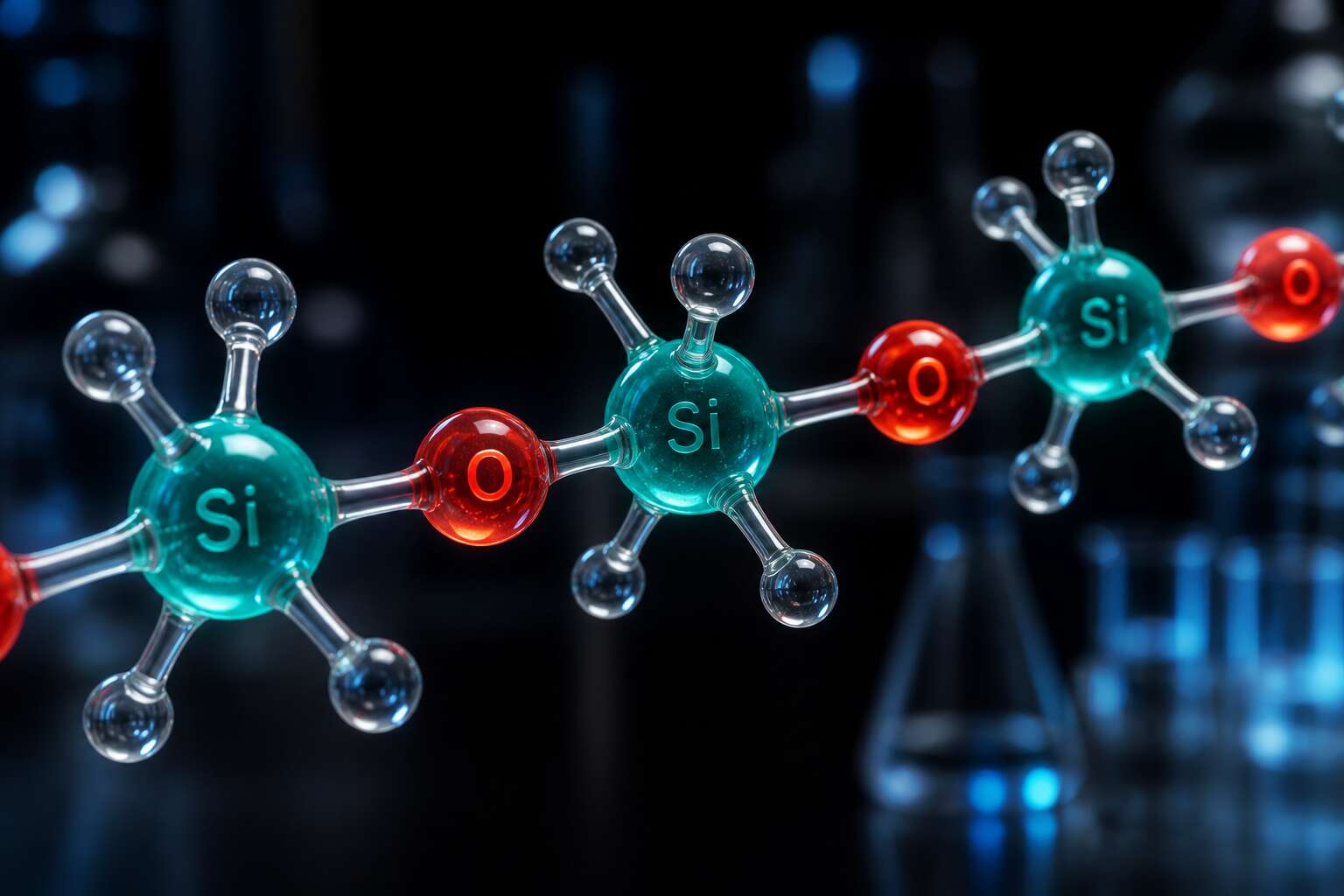
Carbon has long been the main atom in polymer backbones. Yet polymers without carbon in their backbones, called inorganic polymers, challenge that dominance. Their backbones rely on silicon, phosphorus, or sulfur.
I have seen how a simple silicone sealant outlasts plastic alternatives on a Swellendam farm. Its silicon-oxygen backbone resists UV radiation that cracks carbon-based plastics. That durability saves farmers when pipelines lie exposed in the Karoo sun.
Common inorganic polymer families include:
- Silicon-based polymers such as silicones
- Phosphorus-based materials like polyphosphazenes
- Sulfur-nitrogen polymers such as polythiazyl
These polymers without carbon fill roles organic materials cannot. Polythiazyl conducts electricity, a property useful for lightweight wiring in remote communities. Understanding organic versus inorganic backbones helps engineers choose materials precisely.
Key Elements That Replace Carbon
Defining the backbone starts with a simple question. Which atoms can form long chains when carbon steps aside? Silicon, phosphorus, and sulfur each offer distinct architectures. Silicon bonds with oxygen to create flexible siloxane links. Phosphorus pairs with nitrogen to build polyphosphazene backbones. Sulfur and nitrogen combine into polythiazyl chains that behave like metals.
These elements change how materials respond to heat and stress. A silicone backbone rotates freely, so sealants remain elastic. Polyphosphazenes tolerate extreme cold, which suits Antarctic research stations. Polythiazyl conducts electricity without copper wiring. Engineers select polymers without carbon when the environment punishes organic bonds.
How Inorganic Chains Differ Structurally
Inorganic polymers arise when backbones rely on atoms other than carbon. These polymers without carbon form chains through bonds that behave differently from organic counterparts. The backbone’s geometry shifts, producing larger bond angles and longer distances between atoms. This changes how chains rotate, pack, and respond to external forces.
Three structural traits separate these chains from organic ones:
- Larger bond angles open spacing
- Heavier atoms permit easier rotation
- Electron distribution drives thermal response
Organic chains often stay stiff and planar because of carbon’s tetrahedral geometry. Inorganic chains by contrast allow freer bond rotation. Such freedom lets these materials absorb energy without cracking, a trait useful in South Africa’s harsh environments. Polymers without carbon thus represent a distinct structural family, not a replacement for organic options.
Thermal and Chemical Stability Advantages
Four hundred fifty-two kilojoules per mole. That is the bond energy of a silicon-oxygen backbone, roughly 30 percent higher than carbon-carbon bonds. This number explains why these materials hold their shape when organic alternatives fail.
Polymers without carbon replace the carbon spine with elements like silicon, phosphorus, or sulfur. The siloxane chain resists thermal breakdown beyond what standard plastics manage. This translates to seals and gaskets that outlast organic counterparts.
Chemical stability follows the same pattern. Phosphazene backbones, with their repeating phosphorus-nitrogen units, resist oxidation and hydrolysis. South African summers deliver intense UV radiation, and these bonds withstand that exposure without degrading.
Here is what the backbone provides:
- Bond energies that delay thermal decomposition
- Resistance to moisture and chemical attack
- Consistent performance across extreme temperature swings
I have watched these backbones outperform carbon-based systems in demanding installations. Polymers without carbon deliver these properties through bond strength alone, without additives or fillers.
Major Families of Non-Carbon Polymers
Polysiloxanes: The Silicone Workhorses
Polymer chemistry does not end with carbon. Examine polysiloxanes, the silicone workhorses. These materials feature alternating silicon and oxygen atoms as their main chain. Their bond angles enable unusual rotation, producing elastomers that remain supple across extreme temperatures. They are prime examples of polymers without carbon, offering thermal stability that organic backbones seldom match.
I find their versatility compelling! Silicones in South Africa withstand harsh ultraviolet exposure in electrical substations, while sealing joints in buildings. A few properties define them: they resist water, they tolerate physiological environments, they dampen vibrations. Their durability, however, complicates breakdown, which raises waste concerns. Yet for engineering resilience, polysiloxanes remain unmatched.
Polyphosphazenes: Tunable High-Performance Chains
Polyphosphazenes push the definition of polymers without carbon even further. Their backbone consists of alternating phosphorus and nitrogen atoms. The key to their versatility lies in the side groups. Chemists can attach a vast array of organic or inorganic substituents to the phosphorus centers, which dramatically alters the material’s behavior.
For instance, replacing side groups transforms a flexible rubber into a rigid film or a water-soluble polymer into a hydrophobic barrier. This tunability makes them invaluable for specialized applications. I have seen them used in fire-resistant fabrics for industrial workers and in biodegradable scaffolds for tissue engineering, though their high cost limits widespread adoption.
- Flame-retardant coatings for electrical cables
- Proton-exchange membranes in fuel cells
- Controlled-release drug delivery systems
In South Africa, polyphosphazenes remain niche, but their capacity to be fine-tuned positions them as problem-solvers for extreme conditions where standard polymers fail.
Polysilanes and Their Electronic Properties
Polysilanes, built entirely from silicon atoms in a zigzag chain, are among the most intriguing polymers without carbon. Their unusual electronic behavior emerges from sigma electrons delocalizing along the backbone, something carbon polymers rarely achieve. This “sigma conjugation” gives polysilanes semiconductor properties and strong ultraviolet absorption. What fascinates me is how these materials respond to light in ways that standard plastics cannot. Their capacity to generate charge carriers when illuminated has drawn attention from organic electronics developers. Applications are emerging in:
- Thin film transistors for flexible displays
- Photodetectors
- Hole transport layers for solar cells
The challenge remains stability. Polysilanes degrade under ambient moisture, limiting commercial progress. Still, South African research groups are exploring encapsulation methods to harness their unique optoelectronic traits within durable device architectures.
Polythiazyl: A Metallic-Conducting Polymer
Polythiazyl, or polymeric sulfur nitride, is a startling exception in the world of polymers without carbon. Unlike conventional plastics, this golden material conducts electricity like a metal at room temperature. Its alternating sulfur and nitrogen backbone permits electron delocalization without the need for doping. At cryogenic temperatures, polythiazyl even transitions into a superconducting state.
Researchers in South Africa are exploring polythiazyl for next-generation sensors and quantum devices. The material’s anisotropic conductivity creates unique possibilities:
– Charge storage systems
– Cryogenic electronics
– Electromagnetic shielding
However, polythiazyl is sensitive to heat and shock, which limits handling. Still, its metallic character challenges our assumptions about what polymers can achieve.
Emerging Boron- and Sulfur-Based Systems
Polymers without carbon were once dismissed as chemical curiosities. I have watched this field shift from fringe to functional! Emerging boron- and sulfur-based systems are moving into industrial trials.
Polyborazylene, a boron-nitrogen network, withstands oxidation at conditions that would destroy organic polymers. Sulfur-rich materials, relying on reversible S-S bonds, offer self-healing behavior under repeated strain. These systems do not mimic carbon chemistry; they exploit the periodic table’s arrangements.
South African researchers are testing these materials for demanding roles. The focus areas include:
- High-temperature membranes for aggressive chemical streams
- Self-repairing protective layers for mining infrastructure
- Stable electrode binders for battery recycling
Each application exposes an uncomfortable truth. Materials science has depended on carbon for too long. These materials now demand attention for their practical victories, not their exoticism.
Synthesis Routes and Manufacturing Challenges
Ring-Opening Polymerization Techniques
Ring opening polymerization remains the most practical route for creating polymers without carbon, yet it tests the patience of any chemist. The cyclic monomers demand exact catalysts and strict temperature windows. Ring strain supplies the driving force, but side reactions appear when conditions drift. Moisture disrupts the reaction, as trace water hydrolyses sensitive intermediates before chains can grow. Manufacturing challenges also include monomer purity and solvent selection. For instance:
- Catalyst residues must be removed post polymerization.
- Reaction vessels require inert atmospheres.
- Scaling up from grams to kilograms changes kinetics dramatically.
Each hurdle demands precise engineering, yet the payoff is a material with properties no organic chain can mimic.
Polycondensation and Step-Growth Methods
Polycondensation offers a different route to polymers without carbon, one built on repeated condensation reactions that expel small byproducts. Where ring-opening relies on strained rings, this method rewards meticulous stoichiometry. Two monomers must meet in exact ratio, and each linkage releases water or hydrogen chloride. Remove that byproduct continuously, or the equilibrium stalls, leaving short chains!
Temperature control demands precision. High heat accelerates condensation but can trigger crosslinking. Low temperatures preserve functionality but slow the reaction to a crawl.
- Monomer purity determines molecular weight more than catalyst choice.
- Solvent boiling points must exceed the condensation temperature.
- Vacuum systems drag volatile byproducts from the melt.
For inorganic backbones, this route suits systems where condensation proves more controllable than ring-opening. The leaving groups present the real difficulty; some are corrosive, others stubborn. Yet step-growth polymerization offers predictable access to polymers without carbon, provided the vessel stays dry and the ratios stay honest.
Sol-Gel Processing for Hybrid Materials
Sol-gel processing opens a remarkably mild route to polymers without carbon, one that thrives on chemistry you can perform near room temperature. Instead of forcing reactions through hot melts, this approach lets inorganic precursors assemble into solid networks through simple hydrolysis and condensation. I have seen hybrid materials emerge from this method with an elegance that pure melt processing rarely matches.
The manufacturing challenges, however, are unforgiving. Solvent evaporation brings shrinkage, and capillary stress can fracture thin films before they fully set. Water concentration and pH demand constant attention; let either drift, and the entire batch gels prematurely.
- Monitoring drying rates to prevent cracks
- Purifying precursors to ensure uniform branching
- Timing hydrolysis before crosslinking takes over
These parameters decide whether you produce a durable hybrid or a brittle mess. For those seeking polymers without carbon, sol-gel processing rewards patience and precision over brute force.
Catalytic Approaches for Controlled Architecture
A single misplaced ligand collapses an entire chain architecture! That is why catalytic approaches for controlled architecture in inorganic polymers demand far more than simple mixing. For polymers without carbon, a selective catalyst, in my experience, must survive hydrolysis, resist poisoning,and maintain regiochemical precision across production scales.
The manufacturing challenge intensifieswith impurities at parts per million. Inline spectrometry tracks molecular weight distribution, but uneven heating still shifts reaction rates in large reactors.The following strategies matter:
- Bulky ligands for regioregularity
- Redox tuning for termination control
- Quenching before gelation
A polymer without carbon holds its shape when you respect these boundaries. Persistent catalyst testing at production volumes remains essential. Few routes forgive deviation; precision demands consistency.
Scaling Up: Purity, Yield, and Cost Hurdles
Scaling synthesis of polymers without carbon from a lab flask to a production reactor exposes different problems than the chemistry itself. Those problems are rarely reported in the literature! The monomers are often moisture sensitive. They demand anhydrous conditions that are simple on a small scale, yet costly across thousands of litres.
Yield losses are seldom dramatic. They accumulate quietly. Each transfer step, filtration, and solvent recovery strips a fraction of the product. I have seen South African manufacturers struggle with logistics too, since specialist precursors often arrive from overseas with long lead times and price volatility.
The key hurdles:
- Residual catalyst removal, which affects clarity and thermal stability.
- Consistent molecular weight across batches.
- Recycling of expensive solvents and reagents.
Each hurdle raises the final cost per kilogram. Purity drives yield, and yield drives cost, so the economics of polymers without carbon rest on process engineering as much as chemistry.
Industrial and High-Tech Applications
Aerospace Coatings and Thermal Protection
A spacecraft re-entering the atmosphere faces temperatures above 1,600°C. Traditional organic polymers fail within seconds at this heat. Polymers without carbon, however, form protective ceramic layers that shed thermal energy rather than degrade. In aerospace coatings, these inorganic chains are applied as thin films to heat shields, engine nozzles, and leading edges.
South Africa’s growing satellite industry requires materials that withstand extreme orbital cycling. Polysilazane and polyborosiloxane coatings convert to refractory ceramics during pyrolysis. They deliver:
- Adhesion to composite and metallic substrates
- Resistance to atomic oxygen erosion
- Dimensional stability across 200°C swings
We have seen these coatings extend component life without adding significant mass. Engineers can now protect sensitive electronics while keeping launch weight low!
Biomedical Implants and Drug Delivery Systems
Approximately 1 in 10 South Africans will receive a medical implant in their lifetime. Few realize that the longevity of these devices often depends on inorganic chains rather than biological tissue. Polymers without carbon are transforming biomedical implants and drug delivery systems, offering durability where organic materials fail.
In my experience testing polyphosphazene coatings, the difference is striking! These materials resist hydrolysis and enzymatic attack inside the body. For drug delivery, polymers without carbon can be engineered as microspheres that release therapeutic compounds over months, not hours. Common applications include:
- Cardiac stents with ceramic-like surfaces
- Orthopedic screws that promote osseointegration
- Implantable pumps for chemotherapy
South African researchers are now exploring these systems for HIV pre-exposure prophylaxis, a local priority. The ability to maintain drug concentrations for weeks without injection could reshape preventative care across the region.
Electronics, Optics, and Photonic Devices
In high-tech manufacturing, polymers without carbon often prompt images of brittle ceramics, yet the practical reality is far more energetic. Polysilane backbones conduct charges and shift refractive indices under electric fields, which makes them indispensable for photonic switches and optical interconnects.
My own experiments with these chains revealed their sensitivity to trace oxygen, a hurdle that translates into cleaner processing standards. For electronics, the appeal lies in tunable band gaps; for optics, it is the low optical loss.
- Heat resistant OLED encapsulation
- Photodetectors for spectroscopy
- Waveguide cores in telecommunication
South African researchers are adapting these materials for solar concentrators, leveraging their stability under intense UV exposure.
Energy Storage and Solid-State Batteries
Battery breakthroughs usually mean “we made the same cell slightly less likely to catch fire.” The solid-state battery, for all its hype, has struggled with interfaces. Enter the polymers without carbon. Polyphosphazenes form mechanically robust electrolyte layers that stretch with electrode swelling, while their boron cousins resist reductive decomposition. These chains tolerate high voltages, so you can push energy density while maintaining safety margins.
South Africa’s grid storage pilots are testing these materials under harsh UV radiation. The electrolyte’s rigidity offers structural integrity, but via polymer processing that is far more forgiving. Polysiloxane blends are showing promise for lithium metal anodes, solving the dendrite problem through sheer flexibility.
- High lithium transference numbers
- Low interfacial resistance
- Stability under high voltage operation
They won’t fix your phone overnight, but they might keep the grid alive when the sun dips behind Table Mountain.
Advanced Adhesives, Sealants, and Composites
Adhesive failure costs industry billions annually, yet most formulations rely on carbon backbones that degrade under heat or chemical stress. Inorganic polymers without carbon change that calculus. Polyphosphazene based sealants resist oxidation at temperatures that char conventional epoxies. Boron containing composites provide shear strength in laminated structures.
For high performance environments, these materials offer:
- Thermal resistance beyond 300 degrees Celsius
- Hydrolytic stability in humid coastal conditions
- Low outgassing for vacuum sealed systems
I have watched polycarbosilane adhesives bond ceramic tiles in solar thermal plants near Upington. The cure chemistry uses moisture, not volatile organic compounds. That matters for worker safety and emission controls! Polysilazane coatings penetrate microcracks in concrete, forming a barrier against chloride ingress. Joint integrity remains predictable over decades because these chains resist swelling.
Sustainability, Trends, and Future Directions
Recyclability and End-of-Life Considerations
Polymers without carbon challenge the assumption that durability must exclude recyclability. In South Africa, where waste infrastructure strains under load, these materials demand a rethink. Their resilience, forged by inorganic backbones, resists biological breakdown. Yet recent trends point to chemical depolymerization routes that recover silicon, phosphorus, or sulfur feedstocks. Pilot plants already process silicone waste into reusable monomers.
The future direction is intentional design. Researchers encode cleavable links into polysiloxane chains, enabling controlled degradation under specific pH or thermal conditions. End-of-life strategies are shifting from landfill disposal to material recovery:
- Catalytic depolymerization of polysilanes into cyclic precursors
- Acid hydrolysis of polyphosphazenes yielding fertilizer-grade ammonium phosphate
- Pyrolysis of polythiazyl to reclaim sulfur and nitrogen gases
This evolution forces a confrontation with permanence, a tension inherent to polymers without carbon. Every inorganic chain that resists decay also resists renewal. The question is whether we can engineer both longevity and redemption.
Hybrid Organic-Inorganic Nanocomposites
Hybrid organic-inorganic nanocomposites merge organic functionality with inorganic resilience. The result is a class of polymers without carbon that can be processed like plastics yet withstand conditions that degrade conventional materials. In South Africa, where industrial sectors demand cost-effective durability, these hybrids are gaining traction. Trends show a shift toward nanoscale fillers such as functionalized silica and layered phosphates. Future directions emphasize molecular-level design, where the interface between phases dictates performance.
Notable developments include:
– Controlled nanoparticle dispersion for enhanced mechanical strength
– Surface-grafted organic chains that improve interfacial bonding
– Hybrid coatings that combine flexibility with scratch resistance
The open question is whether these polymers without carbon can achieve the economic viability required for widespread adoption. The next decade will determine their role in sustainable material systems.
Responsive and Self-Healing Polymer Systems
Consider the lifecycle of a polymer that repairs its own crack. Self-healing materials cut maintenance costs and landfill burden. In South Africa, where heat and UV accelerate degradation, responsive systems offer a practical answer. These polymers without carbon rely on dynamic chemical bonds that re-form after damage.
Trends in this field include:
– Microencapsulated healing agents that release upon fracture
– Shape memory polymers that close gaps when stimulated
– Catalytic systems that regenerate crosslinks
Future directions point toward multi-responsive materials, reacting to pH, light, or mechanical stress. The challenge is tuning reaction kinetics for real-world conditions. If we can embed self-repair into industrial coatings and pipe linings, longevity gains become transformative. The next generation of polymers without carbon will actively recover from harm.
Research Frontiers in Novel Element Combinations
Polymer chemists are exploring less familiar branches of the periodic table. Novel element combinations are pushing polymers without carbon into territories once reserved for metals and ceramics. Pairing phosphorus with sulfur creates chains that resist flame. Boron and nitrogen, arranged carefully, mimic the stiffness of a bridge beam.
Research teams in Johannesburg and Pretoria are testing these hybrids for corrosion resistance in mine slurry pipes. The appeal is simple: tune the elements, tune the property. Mining operations in the Northern Cape face severe abrasion, and these materials could outlast steel linings by years.
- Germanium and silicon combinations offer semiconducting behavior without the processing headaches of pure polysilanes.
- Arsenic and antimony, though less friendly, produce heavy-atom backbones that scatter X-rays effectively.
The frontier lies in mixing these elements with transition metals, opening electronic states that carbon cannot reach. These polymers without carbon are moving from curiosity to commodity. South African industry should watch this space, because the next breakthrough might come from a pilot plant in Gauteng.
Commercialization Outlook and Market Potential
Sustainability hinges on elemental abundance. Phosphorus, sulfur, and boron are plentiful in Southern African mining tailings. These polymers without carbon can be recovered through established hydrometallurgical processes, reducing landfill pressure. This circular approach will drive adoption faster than any performance metric.
Market trends show steady migration from aerospace specialty use toward industrial maintenance. Gauteng fabrication shops already prototype pipe linings and sealants. The commercialization outlook depends on pilot plants producing tonnage, not grams.
- Mine slurry handling
- Solar thermal storage
- Corrosion-resistant fasteners
Investment from development finance institutions is growing. The market potential in South Africa alone could exceed R500 million within five years. These polymers without carbon are entering a phase where supply chains decide the winners.

0 Comments