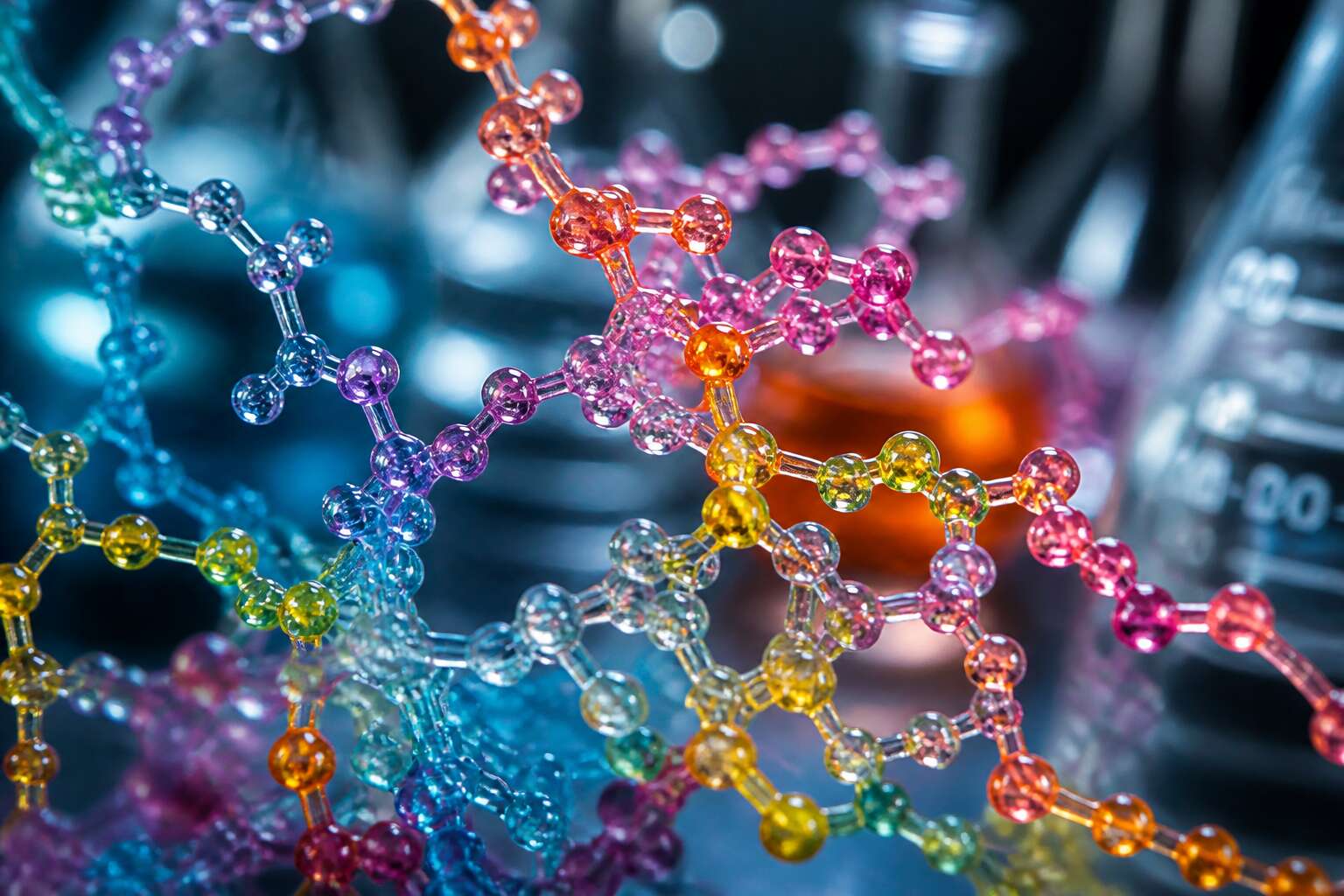
Understanding Reactivity in Polymer Chemistry
Defining polymer reactivity and why it matters
Reactivity in polymer chemistry refuses to be pinned down. The query “are polymers reactive” forces us to examine each chain as a tension between resilience and ruin. Some polymers sit inert under ordinary conditions, while others unravel when exposed to ultraviolet radiation or acidic environments. I have seen this unpredictability confound even seasoned researchers.
- Bond dissociation energy, which sets the threshold for cleavage
- Side group electronegativity, which modifies electron distribution
- Molecular weight, which governs chain mobility and diffusion rates
Such variables mean that the question of polymer reactivity has no fixed answer. Instead, it depends on the surrounding matrix and the energy introduced. For South African engineers working with coatings, waste pipes, or biomedical implants, knowing whether a polymer will change under stress is a matter of practical necessity.
Key factors that determine whether polymers react
Ask a materials engineer whether polymers react and you will get a measured pause. The honest answer is that reactivity depends on the polymer’s architecture. Crystallinity, for instance, plays a decisive role. Tightly packed crystalline regions resist solvent penetration, while amorphous zones allow molecules to migrate and trigger chain scission. Temperature shifts this balance. Above the glass transition temperature, polymer chains gain mobility, making them more susceptible to oxidation.
Cross-link density also matters. A lightly cross-linked elastomer can swell and degrade, whereas a heavily cross-linked thermoset remains stable. Additives complicate the picture. Plasticizers leach out over time, exposing new reactive sites. So when someone asks “are polymers reactive,” the truthful answer is: it depends. We cannot give a blanket answer. And “are polymers reactive” under constant saltwater exposure along the coast? That environment accelerates hydrolysis. That is the real question!
Reactivity versus chemical stability in polymers
Every polymer has a breaking point. That breaking point is not absolute, it is a function of the conditions it faces. The question are polymers reactive demands a closer look at what we mean by stability. Chemical stability does not mean permanent inertness; it means resistance to specific reactions under specific environments. A polymer that sits comfortable in a laboratory bench may degrade quickly in seawater or under ultraviolet light.
Surface reactivity often differs sharply from bulk behavior. A coating can react at its outer layer while its interior remains unchanged, a distinction that matters for long-term performance.
Applications that rely on controlled reactivity include:
- Biodegradable medical implants that break down after healing
- Self-healing coatings that respond to scratches
- Polymer electrolytes that enable battery charging
Understanding this balance helps engineers predict failure points. Instead of asking are polymers reactive, ask when and where. That answer determines design choices.
Common polymer families with high or low reactivity
Some polymers are built for endurance, while others are designed to yield. Understanding this spectrum is essential when asking are polymers reactive, because the answer determines material selection in real world conditions.
Consider the humble fence post. A polyethylene post can stand in the Karoo sun for decades without warping. Its long, stable carbon chains resist hydrolysis and oxidation. Polytetrafluoroethylene, known for its non stick properties, is even more stubborn. These materials earn their reputation for low reactivity through strong, saturated bonds that leave little room for chemical attack.
Other polymer families are far more willing to engage with their environment. Polyesters and polyamides contain ester and amide linkages that readily undergo hydrolysis, especially in acidic or alkaline conditions. This vulnerability can be purposeful. For example:
– Polylactic acid, used in compostable packaging, is designed to break down in industrial compost facilities.
– Polyurethane foams degrade under ultraviolet light, which can shorten their lifespan in outdoor furniture.
– Polycarbonate, common in eyewear and electronics, is susceptible to attack by strong bases and certain solvents.
These differences become crucial when engineers choose materials for South African conditions, from coastal humidity to highveld UV exposure. The question is not simply whether polymers are reactive, but how their specific chemical structures respond to the unique stresses of their intended use. That response, measured in years or in days, defines performance.
What Makes Polymers Reactive or Inert
Functional groups and molecular architecture
One functional group can change a polymer’s entire behaviour. That is the simple truth behind the question of whether are polymers reactive. Polypropylene resists most chemicals. Polyvinyl acetate hydrolyzes in damp air. The difference is not the backbone. It is the pendant group.
Molecular architecture matters just as much. Crosslinked resins lock chains into a rigid lattice, reducing access for reactive agents. Linear chains, by contrast, wiggle freely and expose more vulnerable bonds. Consider these architecture-driven behaviours:
- Branched chains create steric hindrance, shielding reactive sites.
- Crystalline regions exclude solvents, while amorphous zones invite them.
- Crosslink density dictates how much swelling a polymer tolerates.
When you ask are polymers reactive, the answer sits in the side groups and the chain geometry. Swapping an ester for an amide, or adding a methyl branch, changes the chemical story completely.
Chain length, branching, and molecular weight effects
Two polymers with the same repeat unit can behave as opposites in a chemical bath. This is why are polymers reactive remains such a layered question. Chain length, branching, and molecular weight distribution all shift the balance.
Longer chains tangle and restrict segment movement, so solvent molecules struggle to reach vulnerable bonds. End groups multiply as chains shorten, and end groups are chemically exposed. Lower molecular weight fractions pack loosely, permitting deeper water ingress. Branching also changes the outcome. Dense branching creates steric bulk that shields hydrolysable sites, while sparse branches leave open gaps for attack. Consider these contrasts:
- High molecular weight, linear chains often show the greatest resistance to hydrolysis.
- Short, heavily branched chains may swell more and react faster with ambient moisture.
The answer to are polymers reactive often comes down to chain length and segment mobility.
Environmental triggers: heat, light, moisture, oxygen
Polymers react to environmental triggers with surprising aggression. Heat is the loudest offender. Thermal energy agitates molecular chains until bonds snap, turning a sturdy plastic into a brittle mess. Light triggers photodegradation in polymers that never asked for the attention. Moisture penetrates hydrophilic regions and hydrolyses ester and amide bonds. Oxygen oxidises polymer backbones slowly, reducing structural integrity over time.
So, are polymers reactive? Yes, but only when the environment gives them a reason! The answer to are polymers reactive becomes clear when you list the triggers. Each operates differently:
1. Heat accelerates every other reaction, making it the primary catalyst.
2. Light attacks only chromophores that absorb its energy.
3. Moisture needs time and permeability to penetrate deeply.
4. Oxygen requires an initiator, like heat or light, to begin oxidation.
These triggers rarely work alone. A hot, humid, sunlit afternoon in Durban is a full-spectrum assault on any polymer.
Residual catalysts and polymerization byproducts
Residual catalysts are the hidden saboteurs of polymer stability. During synthesis, trace amounts of metallic compounds such as titanium, tin, or zirconium remain trapped within the finished material. These remnants do not rest. They continue to initiate reactions, breaking the very bonds they once helped forge. Polymerization byproducts, including unreacted monomers and low molecular weight oligomers, act as reservoirs of stress. They sit between chains, interrupting crystallinity and providing entry points for degradation. The question of are polymers reactive becomes a matter of contamination. A catalyst that is firmly bound and deactivated leaves a polymer peaceful. A free, wandering catalyst creates a material in constant turmoil. Consider the culprits:
– Residual metallic catalysts
– Unreacted monomers
– Solvent traces
– Low molecular weight oligomers
Each presence determines the reaction profile. For South African manufacturers, humidity and heat amplify these internal flaws, but the flaws exist regardless. So, are polymers reactive? Often, yes. The impurities within decide.
Impact of additives, plasticizers, and fillers
Additives alter polymer behaviour in contradictory ways. A plasticizer softens the polymer matrix by wedging itself between chains. That same wedge creates space for oxygen and moisture to enter. Durban humidity or Highveld heat accelerates what the additive has unlocked. So are polymers reactive? The answer depends on the recipe.
Fillers such as calcium carbonate or glass fibres serve as skeletal reinforcement. They can also trap ions and impurities that would otherwise migrate. A well-dispersed filler pacifies a volatile matrix. A poorly bonded one leaves voids where degradation begins. Consider what each addition changes:
- Plasticizers increase chain mobility
- Fillers trap ions or create voids
- Stabilisers intercept reactive species
Stabilisers, antioxidants, and UV absorbers act as counterweights. They intercept reactive species before they strike. But every additive has a finite lifespan. Once exhausted, even a stabiliser becomes another impurity. These additions determine whether a polymer rests or rots.
Practical Implications of Polymer Reactivity
Chemical resistance and long-term degradation
Are polymers reactive is a question with practical consequences for engineers and manufacturers across South Africa. Chemical resistance is the first line of defence. A polymer that reacts with a process fluid will lose mechanical integrity, often appearing as swelling, cracking, or softening. Long term degradation is predictable only when the underlying reaction pathways are understood.
These real world variables demand attention:
- Chlorinated water in municipal supply systems
- Acidic runoff in mining operations
- Solar ultraviolet exposure in the Karoo
Each environment attacks different bonds. Hydrolysis breaks ester linkages, while oxidation targets tertiary carbons. Knowing whether polymers are reactive in a given medium allows specifiers to select grades that endure. Material selection becomes a matter of reconciling reactivity data with site specific conditions. Small differences in crystallinity or crosslink density can shift the degradation timeline by years.
Crosslinking, curing, and thermoset behavior
Crosslinking changes how a polymer behaves. Before curing, thermoplastic chains slide past each other. After curing, thermosets lock into a rigid lattice. So when someone asks are polymers reactive, the answer often depends on whether crosslinking has occurred. Heat and pressure drive the reaction.
For South African specifiers, I have seen this decide whether piping survives or fails. Crosslinked polyethylene handles hot water lines that would melt standard grades. Epoxy coatings cure into a barrier against acidic runoff.
- Phenolic resins cure irreversibly.
- Silicone rubbers crosslink under UV.
- Polyurethanes cure with moisture.
Each reaction consumes reactive sites. Once exhausted, the polymer becomes inert. That is the practical promise of thermosets!
Surface modification and adhesion performance
Surface modification transforms polymers at the boundary where contact happens. The question are polymers reactive gains practical weight when you need paint to stick or adhesive to hold. Untreated polyethylene presents a nonstick face. Its low surface energy rejects most coatings. Flame treatment or corona discharge oxidises the surface, creating reactive polar groups. These groups create reactive attachment points for the next layer.
Adhesion performance rests on this microscopic preparation. For South African manufacturers, this decides whether a printed label survives Durban humidity or a coating lasts through Highveld UV. I have seen failed bonds trace back to skipped surface steps. In daily practice, the reactivity of the surface decides how long that bond survives.
Surface preparation techniques include:
- Corona treatment for films and packaging
- Plasma etching for complex geometries
- Chemical primers that bridge low-energy substrates
Reactive sites are consumed in bonding, so timing matters. Treat and bond quickly, or the effect fades!
Polymer blending and interfacial compatibility
When two polymers meet in a blend, compatibility depends on chemistry. Are polymers reactive enough to form bonds at the interface? Without reactive sites, the materials separate into distinct phases, and the finished part fractures along the boundaries between those phases. I have watched blends fail on the factory floor because someone ignored this question!
The answer to that question determines compatibilization success. Reactive groups at chain ends create covalent links across the boundary, and the blend holds. This turns a physical mixture into a chemically anchored composite. For South African recyclers, this is the difference between a usable recycled product and a brittle discard.
Reactive compatibilization takes several practical forms in South African processing lines:
- Grafting maleic anhydride onto polypropylene for glass-filled compounds
- Adding epoxy-functional copolymers to polyester blends
- Using peroxide-initiated reactive extrusion for recycled streams
Safe handling, storage, and shelf-life considerations
The question are polymers reactive gets a definitive answer when resin degrades before it hits the screw. Reactive sites in a polymer do not wait for processing. They react with oxygen, moisture, and ultraviolet light during storage. That changes viscosity, colour, and end performance.
South African warehouses can reach 40°C in summer. A polypropylene pellet with residual catalysts can oxidise within weeks. Nylon absorbs water, which hydrolyses the chains. Stabilizers slow this down, but they are spent. Shelf life depends on how fast protective additives are consumed.
- Store hygroscopic resins in sealed moisture barrier bags
- Keep temperatures below 25°C to slow oxidation
- Rotate stock first-in, first-out
When you open a bag, the clock accelerates. Re-testing before use is cheap compared with a scrap lot. Are polymers reactive under these conditions? Yes, always.
Testing and Predicting Polymer Reactivity
Thermal analysis techniques for degradation studies
A polymer can appear stable at room temperature yet lose half its molecular weight at just 150 degrees Celsius. Thermal analysis methods such as thermogravimetric analysis (TGA) and differential scanning calorimetry (DSC) answer the question, are polymers reactive under heat. TGA measures mass loss as temperature climbs, revealing where volatile fragments escape and at what rate. DSC captures exothermic and endothermic events, flagging oxidation peaks and decomposition thresholds before visible damage occurs.
Accelerated heating mimics years of environmental exposure. For South African compounders, predicting thermal failure saves costly recalls. Coupled with kinetic models, TGA data forecast service life at ambient temperatures. Dynamic mechanical analysis tracks stiffness changes as degradation progresses.
Interpretation demands care. Heating rate, sample mass, and purge gas all shift results. Oxygen accelerates mass loss; nitrogen isolates purely thermal pathways. Running multiple techniques yields a complete picture.
Spectroscopic methods for detecting reactive sites
Spectroscopy peers into the molecular architecture of polymers, revealing reactive sites before they manifest as failures. Fourier transform infrared spectroscopy catches the subtle stretching of carbonyl groups, while nuclear magnetic resonance traces the local environment around each proton and carbon atom. These methods answer whether are polymers reactive by exposing the signatures of unsaturation, hydroperoxides, and residual monomer.
Raman spectroscopy complements the picture, especially for carbon black filled compounds common in South African tyre recycling. It detects crystallinity shifts and conformational changes that precede chemical attack.
Consider what spectroscopic screening reveals:
- Oxidation induction times measured in minutes
- Vinylidene end group concentrations
- Catalyst residue distributions across the matrix
Each dataset locates where a polymer will yield first under processing stress. That information lets compounders adjust formulations before problems appear.
Chemical compatibility and immersion testing
Immersion testing answers the practical question of whether are polymers reactive with specific chemicals. We suspend test specimens in aggressive fluids and measure swelling, mass change, and tensile retention over weeks. A tyre compound exposed to diesel fuel behaves differently than one immersed in brake fluid.
The results are clear. Some rubber formulations swell considerably in solvent, while others remain unchanged. Chemical compatibility charts gain meaning when you observe the physical evidence:
- Volume swell percentages after 168 hours
- Hardness changes across the specimen cross section
- Cracking or softening at stress concentration points
These immersion trials predict field failures before they occur. For South African industries handling mining chemicals and fuel transport, this data separates safe formulations from catastrophic ones. When engineers ask whether are polymers reactive, immersion testing gives the most direct answer.
Predictive modeling and computational tools
Before a single specimen touches aggressive fluid, computational tools are already answering the practical question of whether are polymers reactive in specific environments. Molecular dynamics simulations track polymer chains as solvent molecules attempt to penetrate. Density functional theory calculates bond dissociation energies with precision that once demanded years of lab work. Quantitative structure property relationship models scan databases for similar compounds and estimate swelling behaviour within hours.
These tools do not replace immersion testing. They are triage! For South African operations juggling dozens of chemical exposure scenarios, computational screening narrows the field before expensive physical trials begin.
A typical predictive workflow includes:
- Building molecular models from polymer repeat units
- Running solvent penetration simulations at elevated temperatures
- Calculating activation energies for degradation pathways
- Cross referencing predictions against known chemical compatibility charts
The computer flags dangerous pairings early. The laboratory confirms. That sequence keeps plants running and people safe.
Industrial standards and regulatory compliance
South Africa’s polymer industry answers whether are polymers reactive by following strict standards. SABS 1200 and ISO 175 govern immersion testing. They dictate specimen dimensions, exposure durations, and temperature tolerances. Skip a step and your compatibility data is worthless.
Regulatory compliance adds another layer. The National Environmental Management Act pressures manufacturers to prove their materials won’t leach reactive byproducts into groundwater. Auditors ask for traceable test certificates. They want to see:
- Test method references with edition dates
- Sample preparation logs
- Raw data, not summarised conclusions
Without these, a chemical resistance claim is just marketing. Standards make the answer to ‘are polymers reactive’ reproducible, verifiable, and defensible.
Interpreting reactivity data for material selection
Interpreting reactivity data is where the real work begins. A polymer that swells in one solvent may perform flawlessly in another, and the numbers only make sense in context. When I review a datasheet asking ‘are polymers reactive’, I look beyond the final rating. The test conditions matter more than the score. For material selection, I focus on three things:
- The exact exposure medium used during testing, because concentration changes everything.
- The duration and temperature, since short-term stability can hide long-term degradation.
- The failure criteria, whether they measure weight gain, tensile loss, or visual changes.
Each variable shifts the answer. A material selected on average data often fails in real service. Match the test environment to your actual operating conditions, and the reactivity data becomes a reliable predictor.

0 Comments