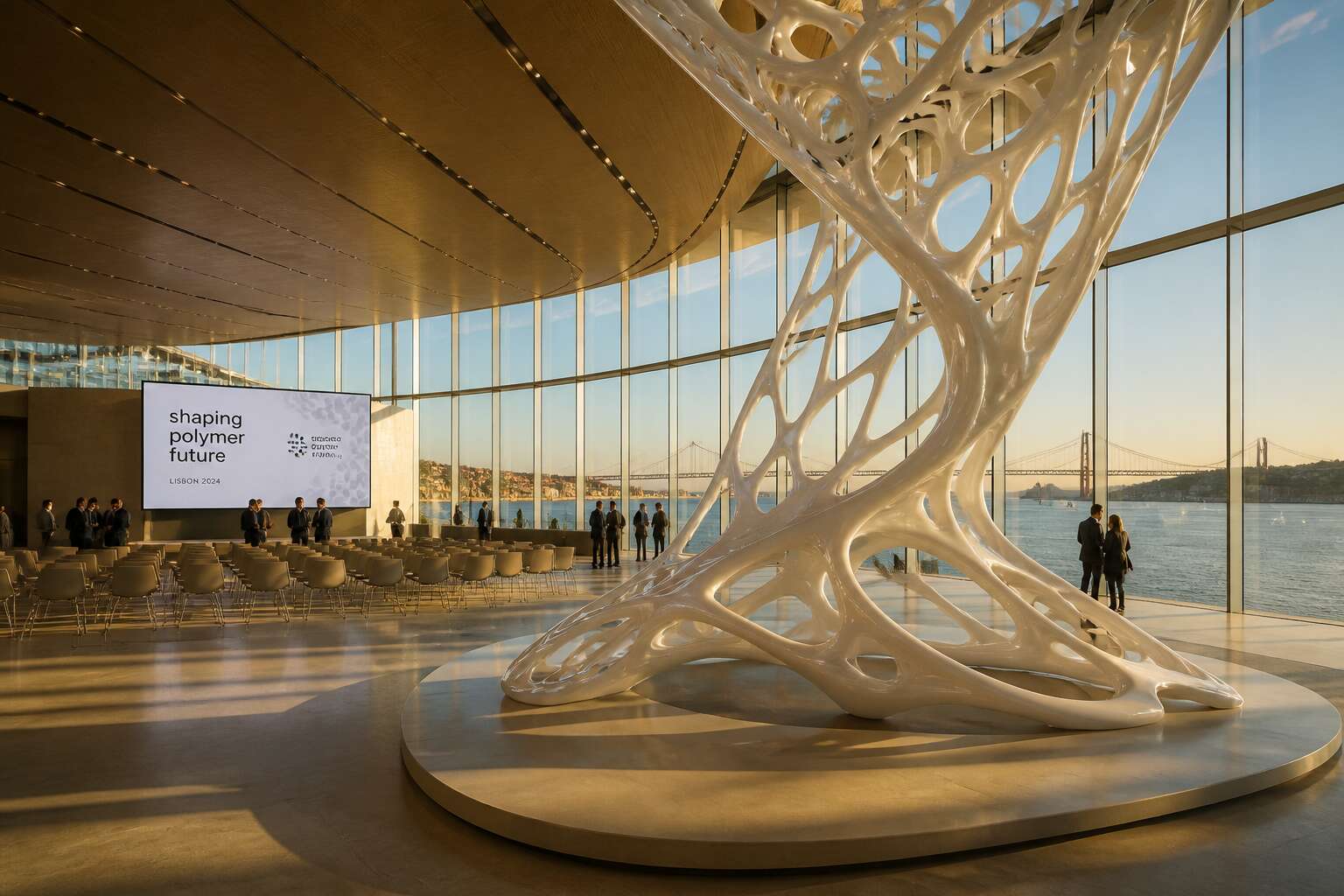
Scientific Program Highlights
Novel Polymer Architectures and Synthesis Techniques
The scientific program for polymers 2026 lisbon unveils a frontier where molecular architecture dictates function. Researchers will present living polymerization methods that craft block copolymers with remarkable precision, along with sequence-defined macromolecules that store information much like biological systems do.
Key sessions will explore:
– Click chemistry routes to cyclic polymers
– Topological engineering through mechanochemistry
– Self-assembling dendrimers for nanoscale delivery systems
This convergence of synthetic ingenuity and structural control promises transformative applications across soft robotics and adaptive materials. I find the focus on iterative synthesis particularly compelling, as it allows chemists to construct polymer chains with atom-level accuracy. The polymers 2026 lisbon gathering offers a rare opportunity to witness these techniques before they reshape industrial practice. Attendees should expect a rigorous, rewarding exchange of ideas.
Advanced Characterization Methods for Polymeric Materials
There is a certain ceremony to deciphering a polymer’s true nature. It requires patience and the right instrumentation. Consider the quest for absolute clarity at polymers 2026 lisbon. Characterization is no longer a footnote; it is the main event.
– Advanced rheology to map the flow of complex melts
– Solid state NMR for atomic level structural confirmation
– In situ microscopy to watch crystallization as it happens
These techniques allow us to observe the subtle dance of chain entanglement without disrupting the performance. I find the shift towards real time analysis particularly refreshing. It provides a level of intimacy with the material that was previously impossible. Attendees at polymers 2026 lisbon will debate the merits of scattering over spectroscopy with great passion. The stakes are high, but the rewards are greater. We are finally able to watch chemical bonds form and rupture. It sounds less like a laboratory and more like gossip about your microstructure.
Sustainable and Bio-Based Polymer Innovations
South Africa produces millions of tonnes of agricultural residue each year. That obvious waste stream becomes the starting point for conversations at polymers 2026 lisbon. The scientific programme highlights sustainable and bio-based polymer innovations with a clear focus on scalability.
I am intrigued by the work on enzymatic depolymerisation of polylactide. This method recovers lactic acid at near quantitative yields. It transforms disposable cups into fresh raw material without heavy solvents.
- Reactive extrusion of starch based thermoplastics
- Microbial fermentation routes to polyamides
- Lignin valorisation for rigid composite panels
At polymers 2026 lisbon, researchers will present lifecycle data from pilot plants in Europe and Africa. They will discuss how bio-based feedstocks perform against fossil counterparts. For a South African audience, these insights matter. Our local industries require solutions that function in warm climates and support rural economies.
Computational Modeling in Polymer Science
The quiet arithmetic of molecules now predicts the fate of entire factories. At polymers 2026 lisbon, computational modeling in polymer science commands its own dedicated stage, shifting the conversation from laboratory trial to industrial precision. For South African engineers, this is not abstract theory. It is the ability to simulate thermal degradation in Johannesburg summer conditions before a single kilogram of resin is produced.
Machine learning algorithms now map the phase behaviour of complex blends, saving months of physical testing.
– Molecular dynamics simulations predict barrier properties for food packaging films.
– Process models forecast viscosity changes during high-speed injection moulding.
– Finite element analysis simulates stress cracking in water pipes under cyclic pressure.
These digital tools reduce the cost of innovation. They allow local manufacturers to explore new formulations using validated data streams, turning raw computation into a strategic asset that runs parallel to physical experimentation. The insight gathered at polymers 2026 lisbon reveals that simulation fidelity has finally caught up with real-world demands.
Event Logistics and Venue Information
Lisbon Congress Centre: Layout and Facilities
Over 2,000 delegates are expected to attend polymers 2026 lisbon, and the venue has the capacity to handle that scale without feeling crowded. The Lisbon Congress Centre sits directly on the Tagus River, a location that offers practical advantages for international travel. The airport is a twenty minute drive, and the metro station connects to the main hall. Your time is better spent on the science, not on navigating a confusing city.
The main auditorium seats 1,000 people across a gently sloping floor. Sightlines are clear from every row. For parallel sessions, the centre provides nine breakout rooms. Each room has its own climate control and acoustic insulation. Poster presentations take place in a dedicated hall on the upper level.
The facility details matter for a smooth experience:
– Wireless infrastructure supports high bandwidth for live data streaming.
– Translation booths are available in three rooms for international speakers.
– Registration areas are separated from the exhibition floor to reduce congestion.
– Catering points are located on each level to minimise queue times.
The exhibition floor spans 2,500 square meters. It hosts the polymer processing equipment and material suppliers. You can move from a lecture to a vendor demonstration in under two minutes. A central atrium acts as the meeting point, with plenty of natural light and seating. For polymers 2026 lisbon, the layout is designed to keep you moving efficiently from one session to the next. There is no wasted space, and every corridor leads somewhere useful.
Registration Fees and Package Options
The quiet hum of anticipation at any gathering of minds is a sound of its own, yet the logistics of attendance are what make the symphony possible. For the thousands converging on the Tagus River, the practicalities of navigating a new city are secondary to the intellectual feast awaiting them. Getting to the heart of the science is the primary goal, and the planning reflects a deep understanding of the delegate’s journey.
I have walked these halls and understand that time is the most valuable currency at a conference. The registration process at polymers 2026 lisbon is designed to be seamless from the moment you arrive, with a clear separation of zones to prevent the usual bottlenecks. The organisers have structured the packages to accommodate different levels of participation, ensuring that whether you are presenting groundbreaking work or observing the state of the field, your entry is straightforward.
To frame your expectations regarding fees and what they cover, consider the typical structure:
– Academic Package: Full access to the main auditorium and breakout sessions, with digital copies of the abstract book and scheduled coffee breaks included.
– Industry Package: Includes exhibition floor access, a dedicated networking lunch area, and priority seating for vendor-led technical demonstrations.
– Student Rate: A reduced fee for full-time students requiring proof of enrolment, providing access to poster sessions and the welcome reception.
The true cost of participation is always weighed against the intangible value of the connections forged. With an estimated 1,800 delegates expected, the density of expertise in the hallways is as significant as the talks themselves. For those joining us from South Africa, the city’s infrastructure is a welcome relief, anchored by the efficient metro link from the airport. Investing in a package that includes the social functions is often the wisest choice, as the informal exchanges over coffee frequently spark the collaborations that last long after the event concludes.
Official Conference Schedule and Deadlines
The countdown to the event has officially begun, and the clock is the most demanding collaborator any delegate will face. The organising committee has locked the technical programme, and the intricate ballet of slides, posters, and panel discussions is now a matter of logistics rather than ambition. For the scientific community travelling from South Africa and beyond, understanding the temporal framework is essential. You do not want to be the one staring at a locked auditorium door while a groundbreaking lecture on rheology proceeds without you.
The daily schedule is structured to maximise intellectual density. Mornings are reserved for the plenary sessions in the main hall, while the afternoons bifurcate into specialised parallel tracks. This format forces a choice, a necessity that ensures every attendee curates their own experience.
– The standard operating hours for the exhibition hall run from 08:30 to 18:00.
– Abstract submission for late-breaking posters closes on the 31st of March.
– The official welcome reception is scheduled for the first evening at the riverside terrace.
The venue itself, the Lisbon Congress Centre, is situated adjacent to the Tejo, offering a starkly modern counterpoint to the city’s ancient hills. Wayfinding is intuitive, with colour-coded signage that divides the sprawling floor plan into digestible sectors. The technical staff are omnipresent, yet unobtrusive, ready to reroute a stalled projector feed or redirect a lost first-time attendee.
Deadlines are a firm commitment, not a suggestion. The final call for oral presentation confirmations is the 15th of May, a date that will dictate the printing of the final programme. For those relying on the metro to traverse the city, the Cais do Sodré station is a mere eight minute walk, though the minibus shuttle service provided by the venue will loop continuously during peak hours. All official announcements will be released via the mobile app, so ensure your notifications are active before you leave the airport. Timing, as always, is everything.
Networking and Collaboration Opportunities
Industry-Academia Meet-and-Greet Sessions
The Industry-Academia Meet-and-Greet sessions at polymers 2026 lisbon are where actual collaboration begins, away from the formality of the lecture halls. Organisers rotate participants every twenty minutes, so a professor from Stellenbosch might find herself opposite a polymer processing engineer from a Portuguese biotech startup, discussing scale-up hurdles with genuine candour. Twenty minutes sounds short, but believe me, it is exactly the right amount of time.
These sessions act as a direct channel to European research consortiums and pilot projects. Several past partnerships, I have been told, started with one conversation over lukewarm coffee in this exact setting. For South African researchers, the value lies in the unvarnished exchange of practical knowledge, from sourcing raw materials to navigating regulatory frameworks. The polymers 2026 lisbon schedule places these meet-and-greets between poster sessions, which keeps attendance high and conversations purposeful.
Poster Presentations and Interactive Forums
Poster halls at polymers 2026 lisbon are not static displays. They are active exchanges. Researchers stand beside their work, ready to explain the story behind the data, and visitors wander with coffee in hand, drawn in by compelling visuals or a question that sparks debate.
Interactive forums take this further. Sessions are designed around open dialogue, where a moderator steps back and the audience drives the discussion. For South African delegates, this is a rare chance to test ideas against European and global perspectives, to learn what funders prioritise and what industry truly needs.
- Speed networking rounds for early career researchers
- Live demos of pilot equipment in the exhibition hall
- Informal evening exchanges hosted by the Lisbon Congress Centre
The real value comes from serendipity. A passing comment at a poster could lead to a joint paper, a shared dataset, or an invitation to visit a lab across the Atlantic. I have seen it happen time and again. That is why polymers 2026 lisbon matters.
Young Researchers’ Mentorship Program
The mentorship lounge at polymers 2026 lisbon pairs early career researchers with established polymer scientists for guided, intensive conversations. These are not brief handshakes. Each mentor meets a small cohort across three days, reviewing project trajectories and shifts in research direction. One seasoned professor described it as the most honest feedback a young researcher can receive.
The program includes structured touchpoints beyond casual introductions:
- Daily office hours for private portfolio reviews
- Mock grant panels that simulate real funding decisions
- Lab exchange agreements initiated on site
South African attendees often arrive with strong technical foundations but limited exposure to European funding structures. The mentorship program addresses that directly. I have watched delegates leave with annotated manuscripts, named contacts, and a clearer sense of where their research fits globally. That clarity outlasts the conference itself, which is precisely why polymers 2026 lisbon matters for emerging voices.
Roundtable Discussions on Polymer Commercialization
Fewer than 15% of polymer research findings ever reach a production line, a gap that the roundtable discussions on polymer commercialization at polymers 2026 lisbon intend to close. These are not abstract panels. They are structured conversations where venture capitalists, patent attorneys, and plant managers sit alongside academics.
Each roundtable follows a specific product pipeline, from lab scale to regulatory approval. Delegates from South Africa frequently hold proprietary formulations but lack market entry routes. The conversations surface those bottlenecks directly.
- Licensing terms for African university patents
- Cost modelling for small batch manufacturing runs
- Distribution partnerships with European compounders
I have watched a Durban based researcher leave with a term sheet sketch and a direct line to a Portuguese injection molder. The value is that concrete.
Workshops for Cross-Disciplinary Partnerships
The workshops for cross-disciplinary partnerships at polymers 2026 lisbon are not informal mixers. They bring polymer chemists into the same room as biomedical engineers, agricultural scientists, and electronics manufacturers.
I have watched a Stellenbosch researcher pair her biodegradable film work with a Dutch packaging firm in a single afternoon. The organisers assign each attendee a problem statement. You work on that problem for two hours, then rotate to a new team.
- Mapping your material’s properties against another industry’s requirements
- Prototyping a joint concept on site
- Sketching a shared development budget
That practical structure means you leave with a concrete agreement, not a loose promise. The organisers cap each workshop at thirty participants, so the conversations stay focused.
Abstract Submission and Publication Pathways
Call for Papers: Key Research Areas
Beneath the vaulted light of Lisbon, the call for papers for polymers 2026 lisbon invites scholars to submit their darkest inquiries into the molecular unknown. I find something almost spectral in the act of committing research to paper, watching it drift into the peer review ether.
Abstract submission opens a corridor to publication pathways that demand precision. The key research areas this year lean toward unglamorous edges of polymer physics: degradation mechanics and long term failure analysis, subjects our other sessions have not yet touched. Consider the following submission pillars:
- Durability under extreme environmental stress
- Microplastic fate in coastal ecosystems
- Polymer recovery from composite waste streams
The committee will select works that challenge conventional assumptions. Accepted abstracts move into the publication pipeline for polymers 2026 lisbon, with full papers indexed in the conference repository. Your findings deserve that permanence!
Submission Guidelines and Review Process
Every year, hundreds of abstracts fail before the review stage. The reason is rarely the science. It is the submission itself. For polymers 2026 lisbon, the guidelines demand clarity over complexity. A title that says what the work found. An abstract that states the method and the failure mode. The committee reads for evidence, not promise.
Submission opens in March and closes in June. The review process for polymers 2026 lisbon takes eight weeks. Each paper goes to two independent referees. They score against three criteria:
- Originality of the research question
- Rigour of the experimental design
- Relevance to real world polymer failure
Accepted abstracts move into the publication pipeline. Full papers are indexed in the conference repository. That permanence matters. Your findings deserve to be cited, not buried in a slide deck.
Proceedings in Top-Tier Polymer Journals
Few things age worse than a brilliant presentation nobody can access. At polymers 2026 lisbon, the conference proceedings solve that. Accepted abstracts receive a DOI and appear in the open repository within weeks of the congress, not months. That speed matters for researchers whose funding cycles demand verifiable outputs.
The publication pathway does not stop at the proceedings. A select group of contributions, chosen for their technical depth, are invited to expand into full manuscripts for a special issue of a top-tier polymer journal. That invitation carries weight: it signals external validation of your methods. For scholars in South Africa, where institutional journal subscriptions often lag behind global access, this route offers a rare, direct line to indexed literature. The abstract you present in Lisbon can become the citation that secures your next grant.
Travel and Accommodation in Lisbon
Getting There: Airports and Rail Connections
Lisbon greets the weary traveller with a salt-laced wind, a city built on seven hills and centuries of maritime ghosts. For those bound for polymers 2026 lisbon, the journey begins at Humberto Delgado Airport, where the metro’s red line slips you toward the centre in under twenty minutes. The airport sits a scant seven kilometres from the congress district, yet a taxi ride at dusk can feel like descending into another era, cobbled streets and flickering lamplight.
Rail travellers arrive at Oriente Station, a gleaming architect’s dream that connects Lisbon to Porto and the wider European network. High speed services make the trip from the north effortless. Many visitors choose accommodation near the Parque das Nações, where riverfront hotels stand a short stroll from the venue. Expect a city that hums with old secrets and new science, waiting to be explored between sessions.
Hotels Near the Congress Precinct
Night settles over the Parque das Nações, and the hotels here hold the quiet hum of anticipation. The Myriad by SANA rises in a dark glass column, its rooms overlooking the Tagus. The Altis Park Hotel sits closer to the congress hall, a short walk past the Vasco da Gama shopping centre.
Accommodation near the venue offers a specific advantage for polymers 2026 lisbon. You return to your room between sessions, escaping the crowd.
- Myriad by SANA: five minutes from the congress precinct
- Altis Park Hotel: directly facing the venue
- Melia Lisboa Oriente: a ten minute stroll along the riverfront
The riverside lodgings disappear quickly, so advance reservations matter. I prefer the Altis myself; the early morning light off the water is a fine prelude to a day of polymer science.
Extended Stay Options for Research Groups
Few things weary a research group like a fortnight in a city that never dims. For polymers 2026 lisbon, extended stays require deliberate choices. The old town’s guesthouses crush large teams, so turn away from the transient.
Look to the apartments near Parque das Nações, where the river holds the conference’s afterglow. I have found monthly rentals on the eastern reach give three or four researchers room to work, without the sterile hum of a hotel.
- Alfama residencies with kitchens for late data sessions
- Campo Grande studios linked by metro to the congress
- Expo area professional lets with weekly cleaning
Rates vanish after the event. Lock in early, or you will wander vacant corridors for polymers 2026 lisbon!
Visa Requirements for International Attendees
For South African passport holders, visa requirements for polymers 2026 lisbon hinge entirely on preparation. Portugal’s Schengen visa application opens six months before travel, and slots at the VFS Global centre in Johannesburg disappear quickly. Researchers should treat the consulate appointment as a deadline before the conference deadline. The standard short-stay visa covers the congress week, but the paperwork demands scrutiny.
Attendees staying longer may explore the D4 visa for scientific research, which requires a host agreement from a Portuguese institution. Short-term visitors, however, need only the standard Schengen application with supporting documents.
Typical requirements include:
– Passport valid for three months beyond departure
– Proof of accommodation for every night in Lisbon
– Travel insurance with 30,000 euro coverage
– Registration confirmation from the conference organisers
My advice: secure that appointment before booking anything else for polymers 2026 lisbon. Processing times stretch to three weeks at peak season, and the congress will not wait for pending documentation.
Local Transportation Passes for Delegates
Lisbon’s transit system moves with quiet efficiency, yet the real secret for delegates is the Viva Viagem card. This rechargeable pass costs 0.50 euros for the card itself, then you load it with fares. A single metro ride costs 1.65 euros, while the 24 hour pass at 6.60 euros unlocks unlimited travel.
For polymers 2026 lisbon, the pass covers:
- Metro lines and city buses
- Historic trams and funiculars
- Suburban trains and the ferry to Cacilhas
The pass works across all these systems. Delegates staying near the congress centre at Oriente station will find the metro and trains converge there, making the daily commute effortless. Buy your card at any metro kiosk, no paperwork needed. I recommend loading a three day pass to start; you can always add more at the machines.
Exhibitions, Sponsors, and Industry Impact
Exhibitor Booths: Equipment and Material Showcases
The exhibition floor at polymers 2026 lisbon fills the Lisbon Congress Centre with working machinery. Extruders run in continuous operation while rheometers display real time flow data. Attendees can touch bio-based pellets, inspect recycled compounds, and compare additive masterbatches side by side.
Sponsors from Europe and Africa occupy prime positions near the main aisles. Their booths highlight turnkey production lines for microfibrillated cellulose and reactive extrusion systems. South African polymer processors will find direct relevance here, as local recycling infrastructure continues its expansion.
The practical demonstrations include:
– In-line spectroscopic analysis for contamination sorting
– High-shear compounding of agricultural waste fillers
– Closed-loop cooling systems for energy efficient pelletising
Industry impact emerges when these technologies meet actual production constraints. A compact injection moulding cell, operated by conference delegates, produces test specimens within minutes. Equipment suppliers have aligned their offerings with the sustainability themes of polymers 2026 lisbon, making the exhibition a deciding factor for procurement decisions across the continent.
Sponsorship Tiers and Brand Visibility Packages
Nearly every serious buyer walking the aisles at polymers 2026 lisbon has one question on their lips: where do I put my company’s money for the biggest return? The answer often begins with the sponsorship tiers and brand visibility packages on offer from the organisers. These are not simple logo placements on a banner. They are structured investments that map directly to the budget and procurement cycles of South African polymer processors.
The sponsorship packages break down into clear categories that allow smaller firms to compete with continental giants. A basic tier might cover a shared demonstration pod near the registration area. A premium tier secures naming rights for a technical session or a networking lounge. The most expensive options place your brand on the delegate app, the printed proceedings, and the main stage screens behind keynote speakers. Each level carries its own cost, but the real value lies in the audience data attached to the package.
– Pre-allocated lead scanning devices with attendee contact details
– Priority scheduling for private meetings with equipment OEMs
– Reserved seating in the sustainability panel sessions
Sponsors already signed up for these tiers represent a mix of European chemical giants and African recycling consortiums. Their presence signals that the procurement decisions at polymers 2026 lisbon will not stop at the exhibition floor. The sponsors are using the event to launch long term supply agreements with local compounders.
What separates this exhibition from others is the direct line between sponsorship spend and actual industry impact. The visibility packages are not abstract marketing. They are tied to the live machinery demonstrations and the material testing zones that draw the biggest crowds. Sponsors who pay for prime placement adjacent to the extruder lines see their branding on the machine safety guards and the specimen collection trays. That placement puts a company name in every photograph taken by quality control managers and technical directors.
For South African firms, the timing aligns with the ongoing expansion of domestic recycling infrastructure. A sponsorship package here secures visibility in front of the exact engineers who specify feedstock sorting technology and melt filtration equipment. The packages also include a meet and greet slot with the conference chairs, a direct line to the academic researchers setting the agenda on bio-based polymer innovations. The decision to sponsor at polymers 2026 lisbon is a decision to sit at the table where the continent’s polymer future gets planned.
Startup Pitch Sessions for Polymer Technologies
At polymers 2026 lisbon, over 40 startup applications will funnel into seven minute pitches, placing the exhibition floor under sharp evaluation. For South African founders developing recycled content modifiers or low energy extrusion controls, these sessions replace months of door knocking. Each presentation ends with a technical interrogation from plant managers and polymer chemists. The best presenters gain pilot production slots at Portuguese compounders and direct introductions to feedstock suppliers among the exhibitors.
Judges assess three core criteria:
- Scalability within South African recycling infrastructure
- Evidence of reprocessing efficiency
- Cost per tonne against virgin polymer equivalents
Sponsoring companies amplify this process. Selected startups see their technologies reviewed in the same sessions where major resin producers debut their grades. That proximity creates a shortcut: a materials supplier can validate a startup’s resin and issue a purchase order before the exhibition closes.
Career Fair and Industry Recruitment Hub
The exhibition floor at polymers 2026 lisbon functions as a live marketplace where material science meets procurement realities. Visitors from South Africa’s converting sector will find machinery demonstrations running alongside resin grade launches, with technical staff available for immediate consultation. This direct access shortens the feedback loop between laboratory innovation and plant floor application, which is essential for companies adapting imported technologies to local conditions.
Sponsors at polymers 2026 lisbon operate beyond logo placement. They curate technical sessions, host application labs, and provide data sheets relevant to emerging market conditions. Their presence influences the event’s direction, with major chemical groups using the platform to test responses to their circular economy roadmaps. For attendees, this means observing which technologies receive long term investment signals.
The Industry Impact Career Fair and Industry Recruitment Hub addresses a persistent challenge: connecting qualified polymer scientists with companies that need their expertise. Rather than a traditional job board, the hub offers structured interviews, portfolio reviews, and direct negotiations with human resources teams from compounders, equipment manufacturers, and research institutes. Positions range from process engineering roles to R&D leadership, with several South African firms scouting for talent to support local production expansion. The hub also features:
– Short format technical assessments for candidates
– Mentorship pairings with established industry professionals
– Access to confidential salary benchmarks for the European market
This integration of hiring with the broader conference schedule ensures that career development remains a core component of the polymers 2026 lisbon experience.




0 Comments