What polymers are used in 3D printing
Thermoplastics for additive manufacturing
In South Africa’s designer hubs and bustling print labs, thermoplastics power fast iteration and real-world testing. For those wondering what polymers are used in 3d printing, the answer points to versatile plastics that melt at predictable temperatures, hold tight tolerances, and withstand daily wear. Local industry data hints at a 60% faster time-to-first-part when workflows lean into PLA-based materials. Projects leap from sketch to usable parts in days, not weeks, redefining what it means to prototype.
Common choices include the following stalwarts:
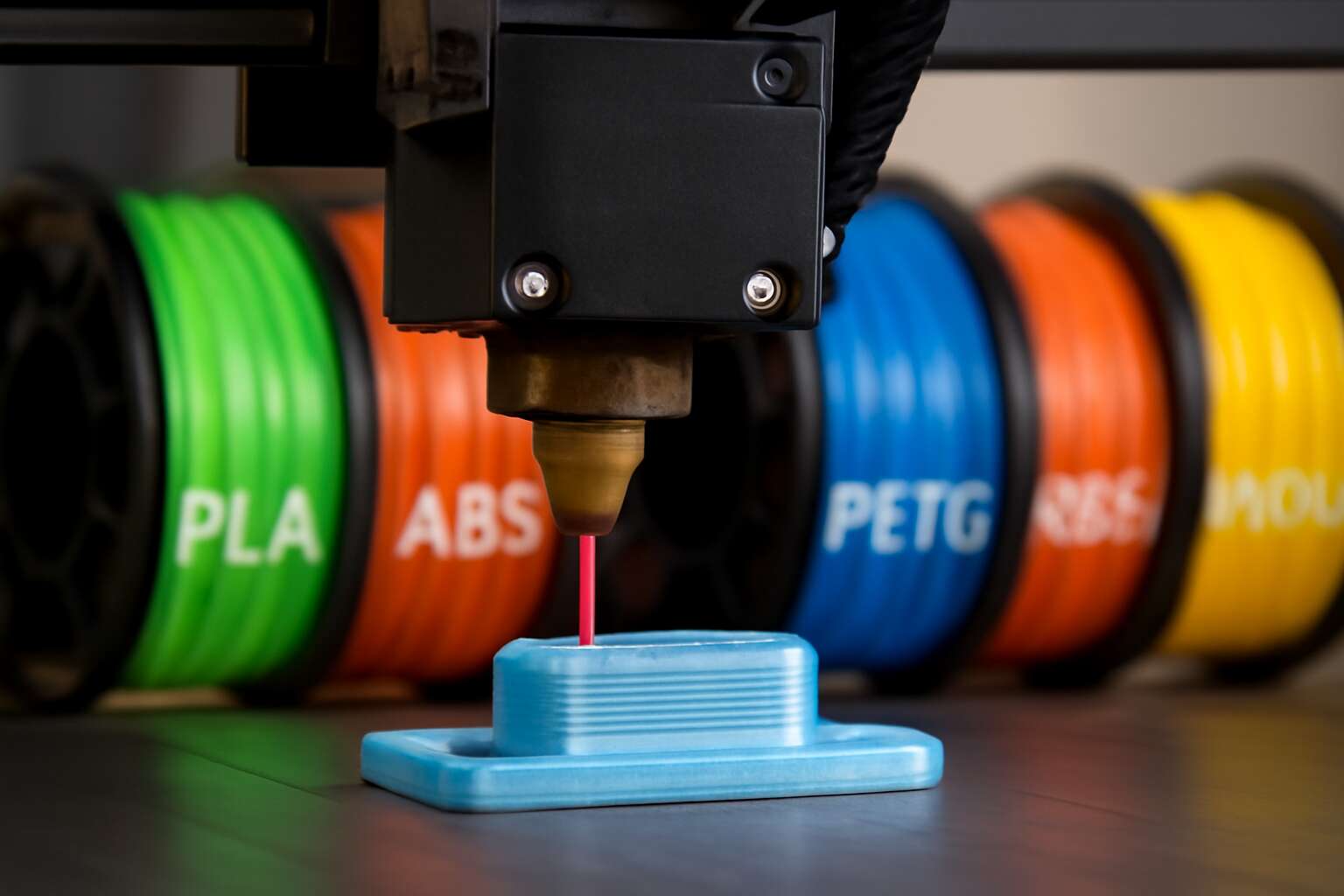
- PLA (polylactic acid) — easy printing, ideal for rapid prototypes
- ABS (acrylonitrile butadiene styrene) — tougher, heat-resistant components
- PETG — strong, with good layer adhesion and chemical resistance
Beyond these staples, other materials such as nylon, polycarbonate, and flexible TPU expand what’s possible across South Africa’s industries.
Engineering polymers for performance parts
Engineering-grade parts demand more than a glossy finish. They need predictable performance under load, heat, and vibration. So what polymers are used in 3d printing? The answer centers on engineering thermoplastics that combine stiffness, impact strength, and chemical resistance. In practice, these materials deliver repeatable tolerances for functional tests, then scale to end-use components when needed. South Africa’s labs are leveraging them to blend fast iteration with real-world reliability.
- Nylon (PA) and reinforced variants for toughness and wear resistance
- Polycarbonate (PC) for rigidity and heat tolerance
- PEEK and PEI (ULTEM) for high-temperature performance
- PPSU and other high-temperature polymers for chemical stability
These options unlock projects from concept to testable part in days, not weeks. With careful processing controls, engineers tune layer adhesion and shrinkage to hit tight tolerances and ensure reliable end-use performance.
Photopolymers for resin-based printing
In resin-based printing, a drop of liquid photopolymers hardens under UV light to reveal detail with a glassy finish. So, what polymers are used in 3d printing? Photopolymers fit the brief, delivering precision and surface quality that thermoplastics can only dream of.
These resins cure through photopolymerization, enabling layer heights measured in microns and parts that glow with accuracy. They excel for rapid prototypes, surgical models, and display pieces—where every facet matters. In South Africa’s studios and labs, photopolymers empower fast iteration with real-world reliability.
- Acrylic-based resins (PMMA family) for rigidity and optical clarity
- Epoxy-based resins for toughness and chemical resistance
- Biocompatible and dental resins for medical-grade applications
With careful resin selection and post-processing, you can tune hardness, impact resistance, and surface finish to align prints with end-use expectations without the heft of traditional tooling.
Fillers, composites, and specialty additives
The 3D printing palette is wider than most imagine. Curious about what polymers are used in 3d printing, you learn that fillers, composites, and specialty additives expand what is possible. This goes beyond raw plastic—it’s the chemistry that shapes strength, density, and finish.
Fillers tune properties and cost, adding minerals or hollow glass beads to control weight and heat flow. Composites weave fibers or particles into the polymer matrix, delivering stiffness and durability that keep pace with demanding prototypes and small-batch parts.
Specialty additives refine performance and aesthetics—impact resilience, flame retardancy, color, and wear. The following examples show the spectrum:
- Mineral fillers and hollow glass beads
- Carbon or glass fiber reinforcement
- Ceramic-filled polymers
- Impact modifiers and flame retardants
- UV stabilizers and colorants



0 Comments