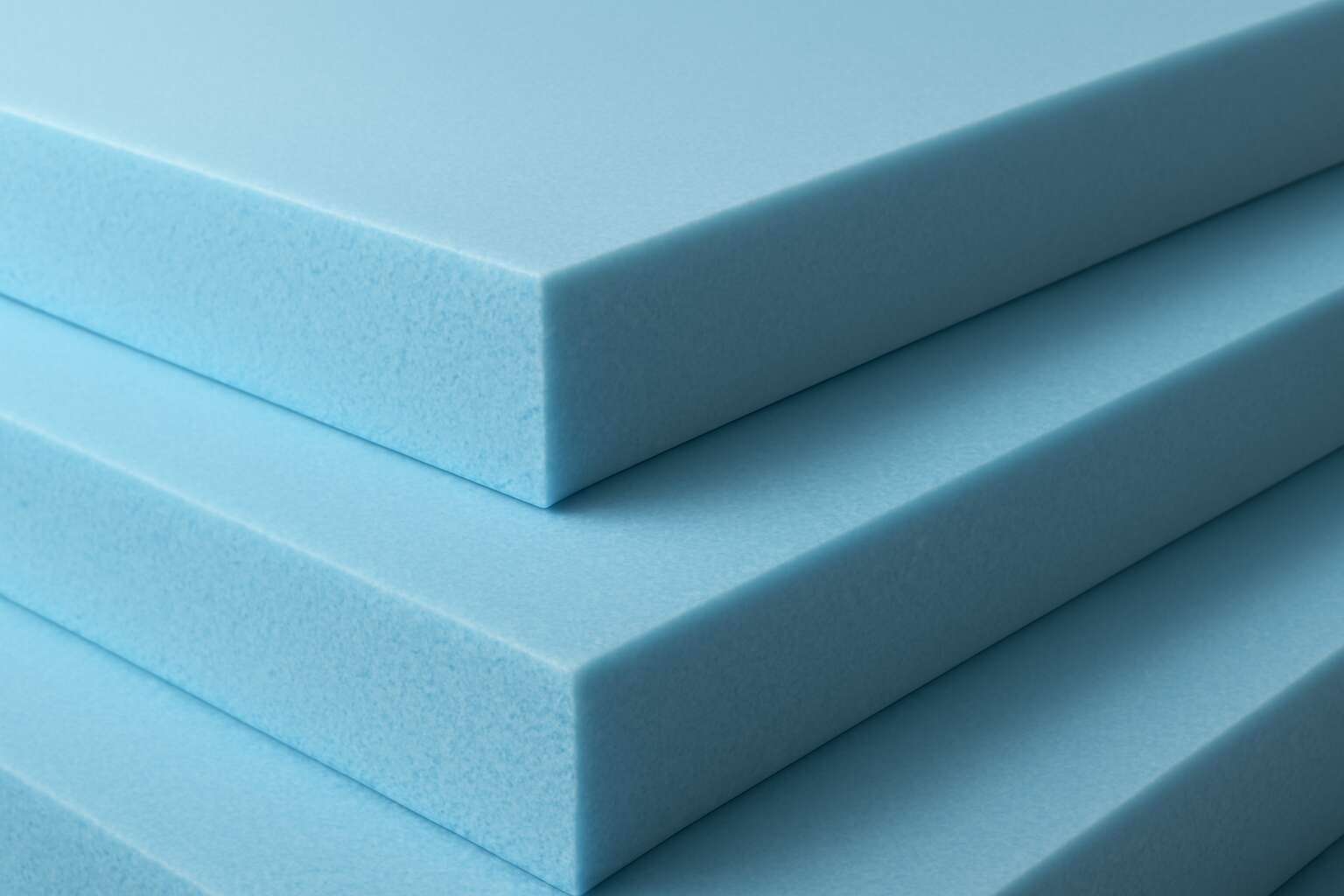
Overview of XPS polymer materials
Composition and structure of XPS materials
On the heat-weary plains of South Africa, the right insulation can shift a home’s mood as surely as rain after drought. I’ve seen how xps polymers cut cooling loads by up to 25%, turning scorch into a cooler, gentler space.
Overview of xps polymer materials: xps polymers are lightweight, rigid foam boards formed from extruded polystyrene with a closed-cell structure. They resist moisture and settle into walls and roofs with quiet efficiency.
- Lightweight and easy to handle
- Excellent thermal resistance
- Moisture and mold resistance
Composition and structure of XPS materials: The cells are uniform and sealed, trapping air and giving xps polymers low thermal conductivity. A typical board blends polystyrene with a blowing agent to create a dense, stable core that supports homes through South African seasons.
Relation between extruded polystyrene foam and XPS terminology
Across South Africa’s heat-weary plains, insulation that actually works can feel like a cool breeze after a drought. xps polymers offer lightweight, rigid boards that resist moisture and quietly anchor into walls and roofs, lowering cooling loads and turning scorched interiors into calmer spaces!
Extruded polystyrene foam is the practical backbone of XPS terminology. In building chatter, ‘XPS’ is shorthand for boards made from extruded polystyrene—closed-cell foam that stays dry and stable through South Africa’s seasons. The terms XPS, extruded polystyrene foam, and polystyrene boards overlap, but the emphasis shifts between manufacturing method and on-site performance.
- XPS is extruded polystyrene foam, not expanded foam.
- Closed-cell structure locks in dryness and minimizes moisture uptake.
- Boards come in various thicknesses for walls or roofs.
Common grades and formulations in extruded polystyrene polymer products
Across South Africa’s heat-battered seasons, a smart insulation choice can quiet the climate’s roar. xps polymers stand out as a reliable shield—lightweight, rigid boards that resist moisture and anchor into walls and roofs, as if whispering to the building itself.
Overview of XPS polymer materials reveals a spectrum of common grades and formulations designed for on-site performance, not just theory. The following categories guide specifiers and installers alike:
- Standard-density boards for general walls
- High-density boards for roof applications
- Moisture-resistant (MR) grades with tighter cells
- Fire-rated or enhanced-safety formulations
Manufacturers tailor cell structure, facer options, and surface finishes to balance bonding, coatings, and long-term stability, ensuring xps polymers stay dry, dimensionally stable, and ready for energy-conscious projects.
Key performance indicators for insulation polymers
xps polymers form a practical spell of insulation in South Africa’s temperature swings. They deliver dependable warmth in winter and quiet thermal stability in summer storms. The overview of their polymer performance centers on on-site reliability: a tight cell structure that resists moisture, a rigid profile that anchors to walls and roofs, and facers designed for coatings and bonding. In short, these materials blend lightness with long-term dimensional stability, supporting energy-conscious builds that endure the country’s diverse climates.
Key performance indicators guide specifiers and installers—from the lab to the scaffold:
- Thermal efficiency (R-value per inch) and overall energy performance
- Moisture resistance and closed-cell integrity
- Dimensional stability and compressive strength
- Fire safety ratings and regulatory compliance
By balancing these indicators, these polymers deliver dependable performance in roofing, walls, and retrofits, turning climate into a design ally.
Historical development and market trends in XPS products
Across South Africa’s dramatic climate swings, xps polymers quietly power energy-smart spaces. A recent study indicates up to 30% energy savings in peak seasons when insulation is properly deployed.
Historical development traces a bright arc from early rigid foams born in postwar labs to today’s precisely extruded plastics. The shift to controlled cell structures and consistent density made these foams reliable for roofs, walls, and retrofit projects.
- Global market trends point to steady demand in new builds and retrofits in SA’s housing market.
- Innovation focuses on sustainability, fire performance, and cost stability amid supply chain challenges.
Together, these forces elevate insulation in the landscape, weaving climate resilience into design.
Properties and performance characteristics
Thermal insulation values and R factor concepts
In a country where energy costs shape everyday life, xps polymers quietly translate comfort into reality. Homes with high-performance insulation can cut heating demand by up to 30%, turning drafty rooms into serene sanctuaries and making smarter budgets feel like a luxury that lasts.
Properties and performance characteristics reveal themselves in a few trusted metrics:
- Low thermal conductivity and high R-value per inch
- Stable, predictable performance across operating temperatures
- Resilience to moisture ingress thanks to a closed-cell structure
- Excellent dimensional stability and long-term creep resistance
R-factor concepts translate to real-world envelope design, where higher R-values per inch in xps polymers translate into thinner walls with greater heat retention. This means better comfort, lower energy bills, and a tangible sense of lasting quality—an elegant testament to durable insulation in South African homes.
Thermal conductivity and dimensional stability under load
In South Africa, the envelope is where comfort becomes economy. Cutting edge insulation can trim heating demand by up to 30%, and the technology behind that reality quietly supports homes.
Thermal conductivity in xps polymers rests on a tightly packed, closed-cell matrix. Heat struggles to travel through the interstitial air, giving the material remarkable resistance to heat flow while keeping a light touch on structural weight. Under a range of operating temperatures, the performance stays stable, so rooms don’t swing between too warm and too cold.
- Under sustained compression, the foam resists densification, preserving insulation thickness.
- Its closed-cell structure minimizes moisture ingress, maintaining performance over time.
That durable balance—stability under load and consistent insulating behavior—makes xps polymers a staple in premium South African buildings, delivering comfort that lasts. It’s a quiet responsibility, where science meets daily life.
Mechanical properties and impact resistance
Across South Africa’s varied climates, xps polymers reveal a quiet, resilient charter. They pair high compressive strength with stable stiffness, resisting sagging under sustained loads and supporting walls and roofs. The outcome is practical elegance: impact resistance that endures cycle after cycle, protecting finishes and reducing maintenance.
- Compressive strength and load-bearing capability
- Impact resistance under repeated loading
- Flexural rigidity and resilience
- Fatigue tolerance and long-term dimensional stability
Key mechanical properties include compressive strength, impact resistance, creep resistance, and fatigue behavior that keep panels stable under load and over time. In South African builds, these traits yield durable envelopes and reliable interiors even under traffic and climate challenges.
This durability is underpinned by a closed-cell matrix that resists moisture uptake, preserving performance in coastal humidity and inland heat. The resulting balance of stiffness and lightness supports premium spaces across South Africa.
Fire performance and safety classifications
Fire safety sits at the backbone of South African construction. Among insulation choices, xps polymers can be tailored to slow flame spread and minimize smoke, turning risk into reliability as seasons swing from coastal humidity to highveld heat. With fire performance classifications such as EN 13501-1 B-s1, d0 in many markets, these materials offer a clear path to safer, compliant envelopes.
- Fire retardant formulations embedded in the polymer
- Coatings and facings that preserve safety ratings
- Regional tests and certifications that guide specification
In practice, I’ve seen the right grade, paired with careful detailing, keeps walls and ceilings safe without sacrificing performance or design intent.
Durability and weather resistance
In the realm of xps polymers, durability and weather resilience read like a quiet spell on the wall. They shrug off coastal humidity and inland heat, maintaining strength and form as seasons swing. The closed-cell structure traps air while breathing with moisture, limiting water ingress and keeping plaster and coatings in confident contact.
- Moisture management that resists swelling and reduces mold risk in humid climates
- Dimensional stability that preserves gaps and joints through heat and cold cycles
- UV exposure resilience when paired with protective exterior coatings
From air-trapped integrity to weather-worn exterior, the material quietly partners with the envelope, turning change into a steady, luminous edge. It resists cracking under freezing cycles, and its surface remains forgiving to installation tolerances, a subtle ally for architects who chase form without compromising resilience.
Manufacturing methods and processing
Extrusion and foaming processes
“Heat should stay with the structure,” a refrain in our workshop, and xps polymers answer with quiet resilience. In South Africa’s climate swings, a well-insulated envelope turns comfort into craft and energy costs into a memory.
Manufacturing methods hinge on extrusion and mindful foaming. A twin-screw extruder feeds melted polystyrene with a blowing agent, shaping a homogeneous melt that forms closed microcells as it exits the die. The result is a continuous sheet whose density and cell structure are tuned by temperature, pressure, and calibrating gaps.
- Blowing-agent selection and concentration
- Die geometry and cooling dynamics
- Quality control of sheet density and cell uniformity
From there, the selection of formulations for xps polymers balances rigidity with resilience to moisture, while production lines hum with efficiency and care, echoing a southern wind through SA factories.
Raw materials and additives used in production
“Heat should stay with the structure,” a line we live by in SA’s climate. These xps polymers answer with quiet resilience, turning a well-insulated envelope into real comfort and energy savings as seasons swing from heat to frost.
Manufacturing methods hinge on extrusion and mindful foaming, but the raw materials and additives set the tone. Polystyrene resin provides the backbone; a hydrocarbon blowing agent like pentane creates the microcell structure; stabilizers, wax, and UV inhibitors protect processing and performance.
- Polystyrene resin
- Blowing agents such as pentane
- Stabilizers, wax, UV inhibitors, and flame retardants
Quality control targets consistent density and uniform cell structure, powered by calibrated extrusion conditions and systematic sampling across SA production lines.
Quality control and testing in manufacturing
Extrusion and careful foaming drive the life of xps polymers, turning resin into a fine, uniform microcell foam. Behind the curtain, polystyrene backbone, pentane, stabilizers, and wax align under calibrated temperatures to yield a stable, insulating form.
Quality control targets consistent density and even cell structure, guided by calibrated extrusion conditions and systematic sampling across South Africa’s production lines. Inline sensors trace drift, while periodic audits ensure the foam’s integrity from start to finish.
- Inline density and cell-size distribution checks
- Batch traceability for blowing agents and moisture control
- Dimensional stability under load and environmental cycling
- End-of-line surface finish and compressive tests
This disciplined approach keeps xps polymers reliable across South Africa’s climates and applications.
Manufacturing challenges and optimization strategies
South Africa’s insulation market runs on precision—nearly 60% of new builds rely on rigid foam insulation for energy codes that tighten every year. Manufacturing methods translate raw materials into xps polymers through tightly choreographed steps, with heat, gas timing, and cell formation aligned to produce consistent boards. The aim is a quiet, stable product that delivers dependable insulation once installed!
Common challenges include moisture ingress, drift in density, and cycle-time pressure—factors that ripple through board quality.
- Moisture management
- Process drift and batch variability
- Cycle-time optimization
Optimization strategies rely on data-driven controls, close supplier collaboration, and energy efficiency in South African facilities; by tuning formulation and processing windows, manufacturers reduce waste and improve uniformity for the product.
Sustainability considerations in extruded polystyrene production
With energy codes tightening year after year, South Africa’s insulation market runs on quiet precision. Nearly 60% of new builds rely on rigid foam insulation, making the production line a test of reliability. Extruded boards are born when heat, gas timing, and cell formation are choreographed to perfection—producing consistent boards made from xps polymers that behave like good neighbors once installed.
From a sustainability lens, extruded polystyrene production is energy-intensive, demanding smarter energy management, heat recovery, and responsible gas use. The aim is to curb emissions without sacrificing performance. A few practical pillars stand out:
- Energy-efficient extrusion controls
- Closed-loop foaming and gas management
- Recycled content and waste minimization
South African facilities increasingly lean into data-driven controls and collaborative supplier networks, aligning formulations with local climate realities and lifecycle thinking. The result is steadier density, lower waste, and a cleaner footprint, while the insulation keeps its dependable warmth.
Applications, markets, and use cases
Residential and commercial insulation applications
In South Africa, a well-sealed envelope is money saved—I’ve seen this play out on diverse sites. xps polymers deliver a light, moisture-resistant barrier that helps homes and offices stay cooler in summer and warmer in winter. The result is steadier comfort and lower energy bills.
Residential and commercial insulation applications span roofs, walls, and underfloor spaces—where heat leaks most. The following use cases are common in SA projects:
- Roof and attic insulation
- External wall systems
- Underfloor and slab insulation
- Cold storage facilities
Markets and use cases are shaped by retrofit demand and stricter energy codes. This polymer solution helps developers and homeowners meet targets while enduring SA’s weather, offering durability, moisture resistance, and reliable thermal barriers for years to come.
Industrial and packaging applications
‘The right foam is the quiet shield that keeps goods intact!’ says a packaging engineer. In South Africa’s bustling distribution hubs, xps polymers deliver light, rigid protection that travels well, resisting moisture and rough handling. They cradle electronics, perishables, and spare parts with a steady, unyielding presence, trimming waste and boosting efficiency.
Industrial and packaging applications in SA span from protective inserts to cold-chain components. The following use cases are typical:
- Protective packaging inserts for electronics, appliances, and medical devices
- Thermal protection for cold-chain transport of perishables and vaccines
- Rigid, reusable crates and pallets support safe, efficient logistics
Emerging uses in energy and civil engineering projects
The right xps polymers form a quiet shield around critical cargo and civil assets, turning volatility into predictability. In South Africa’s energy corridors and sprawling infrastructure projects, their light rigidity and moisture resistance curb heat gain and frost damage, while keeping transport and installation straightforward. The result is fewer repeated handling steps and steadier performance across varying climates.
Emerging uses in energy and civil engineering projects are expanding the footprint beyond traditional insulation. Consider these real-world applications!
- Lightweight geofoam blocks for road embankments, slope stabilization, and backfill where heavy machinery would be costly
- Thermal insulation for underground energy storage, district cooling, and geothermal loops
- Rigid insulation panels and modular plinths for solar farms, wind turbine bases, and resilient road pavements
Across SA markets, these materials—xps polymers—are quietly enabling safer transport, longer-lasting foundations, and more efficient cold chains—tangible proof that insulation can be strategic infrastructure.
Regulatory standards and compliance factors
Across South Africa’s energy corridors, a single, sealed envelope can tame the weather’s tantrums and trim cooling bills by a startling margin. xps polymers have earned their quiet throne in these projects, turning volatility into predictable behavior and defending critical cargo from the climate’s mercurial moods.
Applications, markets, and use cases for xps polymers stretch beyond classic insulation. They quietly fortify transport routes, support modular construction, and elevate cold-chain integrity, letting engineers design with precision rather than fear.
Regulatory standards and compliance factors shape every decision.
- Fire performance classifications and smoke generation
- Thermal performance verification and labeling standards
- Environmental and end-of-life compliance, recyclability
- Supply chain traceability and supplier declarations
Stitching these guardrails together, xps polymers emerge as more than insulation—they are a strategic asset in SA’s built environment.
Market dynamics and regional adoption trends
In SA’s blistering climate, a single envelope of insulation can trim cooling bills by a double-digit margin. xps polymers stand as quiet sentinels along energy corridors, turning capricious weather into predictable performance.
Market dynamics favor faster uptake in Gauteng and the Western Cape, where we see new builds meet energy targets and retrofit programs. Regional adoption trends show growth in cold-chain facilities, modular construction, and rapid-retrofit projects where they are shaping design choices.
- Cold-chain facilities and perishable logistics
- Modular construction and rapid deployment
- Retrofits for aging infrastructure
Across South Africa, xps polymers are more than insulation—they’re a strategic asset for resilience and compliance in the built environment.




0 Comments