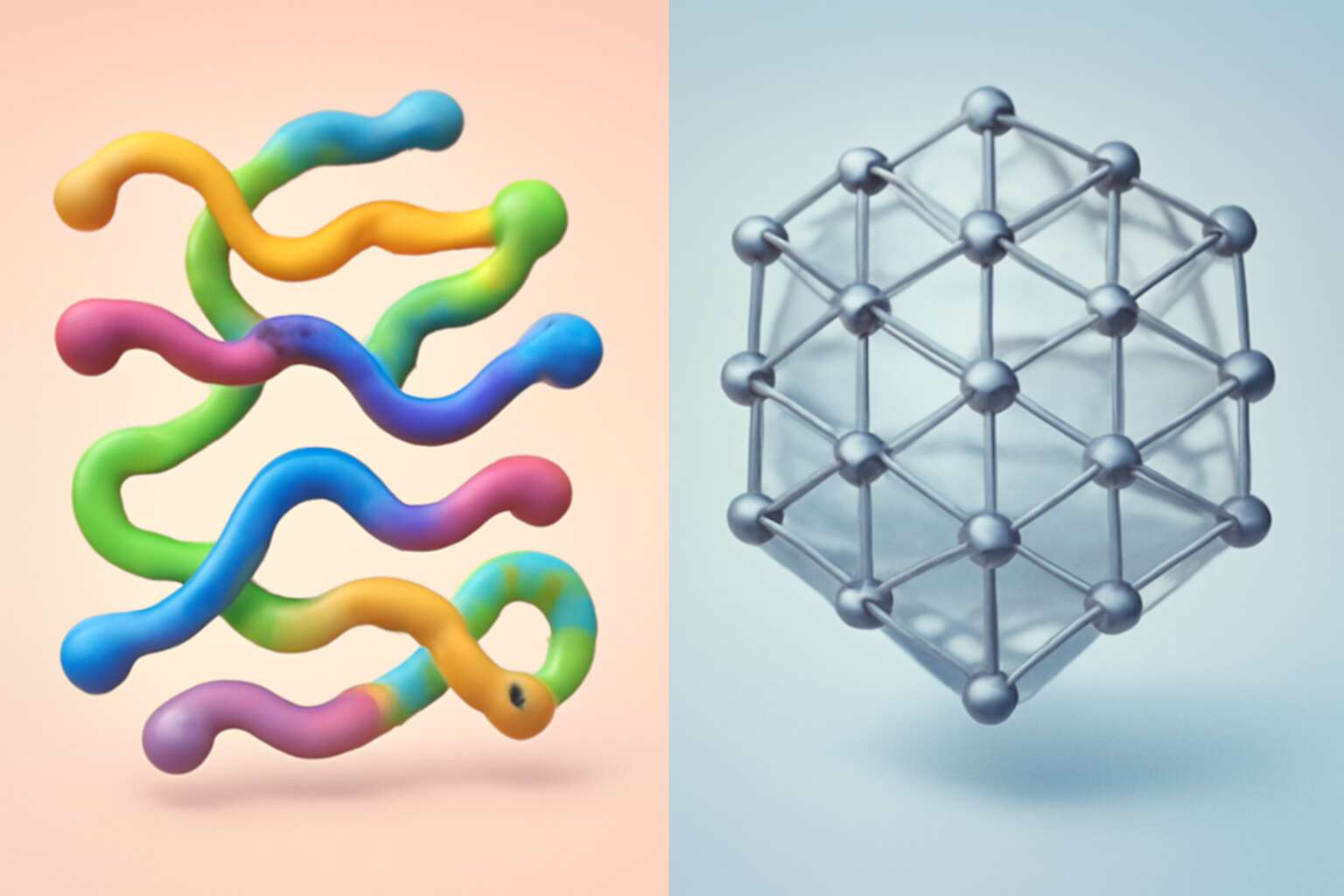
Polymer Chemistry Fundamentals
What Are Polymers? Definition, Monomers, and Repeating Units
Polymers are the unsung workhorses of modern materials, turning a simple repeating unit into a spectrum of properties. A single monomer, repeated thousands of times, can yield a chain that’s pliable, tough, or translucent—often all at once. This quiet versatility underpins everything from packaging to advanced textiles and bio-materials across South Africa, and it does so with a certain elegance that would please even the most fastidious procurement officer!
Definition, Monomers, and Repeating Units: A polymer is a large molecule formed when many monomers join end to end through polymerization. The core ideas to anchor are monomer, repeating unit, and polymer chain.
- Monomer: the building block
- Repeating unit: the chemically identical segment along the chain
- Polymer chain: long, adaptable backbone
In the wider world of materials, polymers and giant covalent structures sit at opposite ends of the design spectrum. Giant covalent structures like diamond exhibit extreme hardness and thermal stability, while polymers tailor properties with cross-links, tacticity, and branching—delivering versatility at scale.
Thermoplastics vs Thermosets: Key Differences
Across South Africa’s manufacturing corridors, the right resin choice can boost efficiency and lifespan. Thermoplastics vs thermosets hinges on how heat and cure drive structure: thermoplastics soften when heated and can be reshaped; thermosets lock in place once cured. This spectrum sits beside polymers and giant covalent structures in the broader materials landscape.
- Thermoplastics: reversible heating allows recycling and reprocessing via standard moulding.
- Thermosets: irreversible cross-links yield high dimensional stability and heat resistance, but recycling is challenging.
- Processing implications: thermoplastics suit scalable, continuous manufacturing; thermosets demand controlled curing and specialized tooling.
For South African industries—from packaging to automotive components—recognising these differences helps align material choice with performance, sustainability, and cost goals.
Polymerization Mechanisms: Addition and Condensation
Polymers are the hidden grammar of industry, where a single addition or condensation step writes sentences that become bottles, bearings, or biopolymers with unexpected resilience. I’ve watched how a subtle shift in mechanism can rewrite the fate of a component!
In polymer chemistry fundamentals, addition polymerization stitches reactive monomers into long chains with minimal byproducts; condensation releases small molecules and weaves networks. Each pathway carves distinctive properties—toughness, clarity, heat tolerance—into the final part.
- Addition: chain growth through radical or ionic mechanisms, yielding high-molecular-weight polymers with predictable sequence control.
- Condensation: step-growth network formation, where stoichiometric balance and cross-linking build three-dimensional architecture.
Beyond linear narratives, this logic sits beside polymers and giant covalent structures, where cross-linking and covalent networks define rigidity. In South Africa’s manufacturing corridors, these mechanisms translate into performance, longevity, and sustainability across industries.
Molecular Weight, Polydispersity, and Processing
Structure writes function, and in polymers, the chorus is molecular weight. The heft of a chain and its distribution shape strength, flow, and service life—the quiet mechanics behind bottles, bearings, and biopolymers. “The weight of a chain writes the fate of a part!”
Molecular weight, polydispersity, and processing determine performance. Higher molecular weight boosts toughness and creep resistance; tighter polydispersity yields uniform flow and clarity. Processing steps—extrusion, molding, cross-linking—translate these traits into real-world performance. In polymers and giant covalent structures, the network topology amplifies these effects, delivering rigidity or elasticity as required.
- Molecular weight distribution
- Flow and processing window
- Cross-link density
- Additives shaping properties
In South Africa, these principles guide durable parts for energy, transport, and packaging.
Covalent Network Structures: An Overview
Diamond, Graphite, and Graphene: The Benchmark Covalent Networks
Three names whisper through the labs that shape our future: Diamond, Graphite, Graphene. In the world of covalent network structures, these solids stand as benchmarks—each a sprawling lattice of strong bonds that stretch across kilometers of atoms in tiny crystals. Diamond offers unyielding hardness; Graphite glides as layers slip past one another; Graphene packs extraordinary strength into a single-atom-thick sheet—graphene is up to 200 times stronger than steel by weight. Researchers chase their quirks and potentials, and the lessons stay with you: covalent networks aren’t mere materials, they’re blueprint magic.
- Diamond: the benchmark for hardness and thermal stability.
- Graphite: lubricating, layered planes that glide under pressure.
- Graphene: a single-atom-thick powerhouse—extraordinary strength and electron mobility.
For designers in South Africa, these networks translate into durable materials and smarter composites—where covalent bonds trade weight for resilience and function. polymers and giant covalent structures hint at what comes next.
Bonding Frameworks: Hybridization and Three-Dimensional Networks
Covalent networks are the backbone of durable materials, and, as one engineer likes to say, ‘The network is the material.’ Bonding frameworks such as hybridization and three-dimensional networks explain why these solids resist heat, wear, and deformation. For designers in South Africa, understanding these ideas matters—polymers and giant covalent structures shape safer, longer-lasting products.
Key ideas include:
- Hybridization-driven geometry: sp3 in diamond yields a rigid 3D lattice; sp2 in graphite produces flexible planes; sp2 in graphene yields strong planar networks.
- Three-dimensional networks: cross-linked polymers and inorganic covalent frameworks form stiff, heat-resistant matrices.
- Bonding implications: mechanical resilience, chemical stability, and electron pathways that drive transport.
This overview anchors future discussions about how these bonds translate into real materials in South Africa’s industrial landscape.
Properties and Performance: Hardness, Thermal Stability, and Electrical Conductivity
Across South Africa’s engineering corridors, the truth is touch: a material’s future hinges on how its atoms connect. Polymers and giant covalent structures anchor a spectrum of performance, from the stubborn bite of hardness to the quiet endurance of thermal stability and the subtleties of electrical pathways. When networks cross-link and align into stiff matrices, components resist heat, wear, and deformation far beyond ordinary crystalline solids. The bond choreography maps durability into daily use.
- Hardness — wear resistance and surface integrity endure harsh service.
- Thermal stability — properties persist at elevated temperatures, reducing creep and softening.
- Electrical conductivity — covalent networks create directed electron pathways that influence transport.
In South Africa’s diverse industries, these networks translate to safer, longer-lasting products and infrastructure that stand up to rigorous operating conditions.
Synthesis and Characterization of Covalent Networks
Around South Africa’s engineering hubs, durability speaks in the language of bonds. “Durability is the signature of a well-knit network,” notes a materials designer, and that truth guides today’s covalent frontier. Covalent networks—where atoms meet with unyielding precision—define how components endure heat, wear, and time.
In this landscape, polymers and giant covalent structures map organization—from rugged rigidity to energy pathways. Synthesis and characterization of covalent networks hinge on precise bonding, cross-linking, and architecture.
- Synthesis routes that tailor cross-link density
- Characterization techniques such as Raman spectroscopy, X-ray diffraction, and electron microscopy
- Scale-up considerations for consistent network formation
Across SA’s industries, these networks translate into safer, longer-lasting infrastructure—proof that polymers and giant covalent structures underpin durable performance day after day.
Comparing Polymers and Covalent Networks
Structural Differences: Chains vs Three-Dimensional Networks
In the realm of polymers and giant covalent structures, architecture rules performance. A recent industry survey notes that cross-linked, three-dimensional networks can resist heat and creep up to five times more effectively than chain-like polymers, delivering stability when temperatures rise and stress mounts.
- Mobility versus rigidity: long chains bend and stretch; three-dimensional networks trap motion with cross-links, yielding stiffness.
- Connectivity: polymers are formed from repeating units into winding threads; covalent networks form a single, uninterrupted lattice.
- Processing realities: chain polymers melt and reflow for shaping; covalent networks resist melting, trading formability for durability.
For South Africa’s readers and manufacturers, these distinctions guide material choices across packaging, construction, and energy storage. When you weigh polymers and giant covalent structures side by side, architecture reveals the likely lifespan, formability, and field performance.
Mechanical and Thermal Properties: Flexibility vs Rigidity
In South Africa’s manufacturing pulse, a telling statistic stands out: cross-linked networks resist heat and creep up to five times better than chain polymers. In the realm of polymers and giant covalent structures, architecture governs performance—three-dimensionally linked lattices deliver stiffness while trapping motion, delivering stability when temperatures rise and stress mounts.
- Flexibility in chain polymers allows easy shaping but can reduce high-temperature endurance.
- Three-dimensional networks deliver stiffness and creep-resistance, at the cost of some formability.
- In South Africa, these traits steer choices for packaging, construction, and energy storage.
So, when evaluating polymers and giant covalent structures, the architecture reveals likely lifespan, form stability, and field performance that matter for local industries.
Applications Across Industries: From Plastics to Electronics
In South Africa’s roll-out of advanced manufacturing, architecture wins. Three-dimensional networks lock in stiffness and resist creep as temperatures rise, keeping equipment aligned and products consistent. Polymers and giant covalent structures reveal how form governs function—branching, cross-links, and lattice clarity determine long-term stability more than raw weight.
Across industries this translates to practical choices:
- packaging and consumer plastics
- construction materials and coatings
- energy storage components and electronics insulation
From durable housings for vehicles to high-speed insulators in next-generation electronics, the choice between chain polymers and three-dimensional networks shapes lifespan, form stability, and field performance in South Africa’s thriving markets.
Environmental Impact and Recycling Considerations
Form follows function, and in the world of materials, the trace of a molecule is a map to the planet’s future. polymers and giant covalent structures carry that map—offering durable, reusable options or, if mishandled, a legacy of waste. In South Africa, this choice matters in factories and households alike.
Environmental impact hinges on lifecycle choices—what starts as a clever polymer, or a tough covalent network, travels through production, use, and end-of-life in ways that echo through communities.
- End-of-life options and compatibility with local recycling streams
- Energy input for processing and potential for energy recovery
- Design for disassembly and material separation to aid recovery
Across South Africa, industry is piloting local reprocessing and extended producer responsibility schemes that aim to close the loop without sacrificing performance. The balance between durability and recyclability shapes packaging, construction materials, and electronics—echoing a hard-won resilience across farms, towns, and cities.
Applications, Innovations, and Future Trends
Polymers in Healthcare, Packaging, and Sustainable Materials
Across the globe, plastics production tops 400 million tonnes annually, reshaping economies and landscapes. In this evolving mosaic, polymers and giant covalent structures unlock elegant solutions for healthcare, packaging, and sustainable materials, with South African researchers blending local grit and global insights.
Applications are shaping tomorrow: in healthcare, polymers enable safer implants and targeted therapies; in packaging, barrier films reduce waste and improve shelf life. Three avenues to watch:
- Bio-based polymers from agricultural by-products
- Chemical recycling and closed-loop plastics
- Smart, responsive polymers for real-time packaging indicators
Future trends promise broader adoption of sustainable materials and stronger lifecycle transparency in South Africa and beyond. Polymers and giant covalent structures will meet needs through additive manufacturing, smart diagnostics, and circular design—where products sing of utility and responsibility.
Covalent Network Materials: Beyond Diamond
Applications of covalent networks span safe medical implants, tough coatings, and resilient packaging. In polymers and giant covalent structures, durability and thermal stability translate into longer-lasting devices and smarter protective layers. In South Africa, this means durable medical devices, rugged mining coatings, and packaging that travels farther with less waste—yet the full potential remains just over the horizon!
Innovations are accelerating covalent-network design. Three notable advances are unfolding now:
- Diamond-like carbon coatings for wear resistance in turbines and tools
- Porous covalent frameworks for selective gas capture, catalysis, and sensing
- Crosslinked polymers for resilient, light-weight 3D-printed components
Future trends point toward lifecycle transparency and circular design, where end-of-life considerations guide material choices. In energy, healthcare, and industry, these advanced networks will power lighter, tougher products and simpler recycling, embedding sustainability into South Africa’s growing tech economy. We watch these shifts unfold.
Processing Advances: 3D Printing, Composites, and Nanostructures
The practical edge of covalent networks is durability that travels with purpose! In the realm of polymers and giant covalent structures, devices endure longer, coatings shrug off wear, and packaging stretches farther with less waste. In South Africa, resilience translates to safer implants, steadfast mining coatings, and smarter lifecycles.
Innovations are accelerating this design language. Processing advances are turning theory into practice:
- Diamond-like carbon coatings tuned for wear resistance in turbines and tools
- Porous covalent frameworks enabling selective gas capture, catalysis, and sensing
- Crosslinked polymers for resilient, light-weight 3D-printed components
Future trends point to lifecycle transparency and circular design, where end-of-life considerations guide material choices. In energy, healthcare, and industry, these networks power lighter, tougher products and simpler recycling, embedding sustainability into South Africa’s growing tech economy.
Future Directions in Materials Science: Integrating Polymers and Covalent Networks
Durability is the new ROI: components that outlast price swings by up to a third. In the realm of polymers and giant covalent structures, practical magic appears as rugged electronics components, tougher structural parts for mining machinery, and high-performance membranes for water treatment. These networks fuse resilience with lightweight form, trimming maintenance costs across industrial landscapes in South Africa.
Innovations are nudging theory into production, from dynamic covalent chemistries to recyclable network designs. Here are moves reshaping the landscape:
- Dynamic covalent bonds enabling self-healing in harsh environments
- Depolymerizable networks that simplify end-of-life processing
- Hybrid processing routes that pair covalent networks with additive manufacturing
Future directions push lifecycle transparency and circular design, with material passports, traceable supply chains, and local R&D ecosystems anchoring South Africa’s tech economy. As these materials mature, we gain lighter, tougher products and smarter recycling pathways—keeping pace with industry demands without sacrificing polish or ethics.




0 Comments