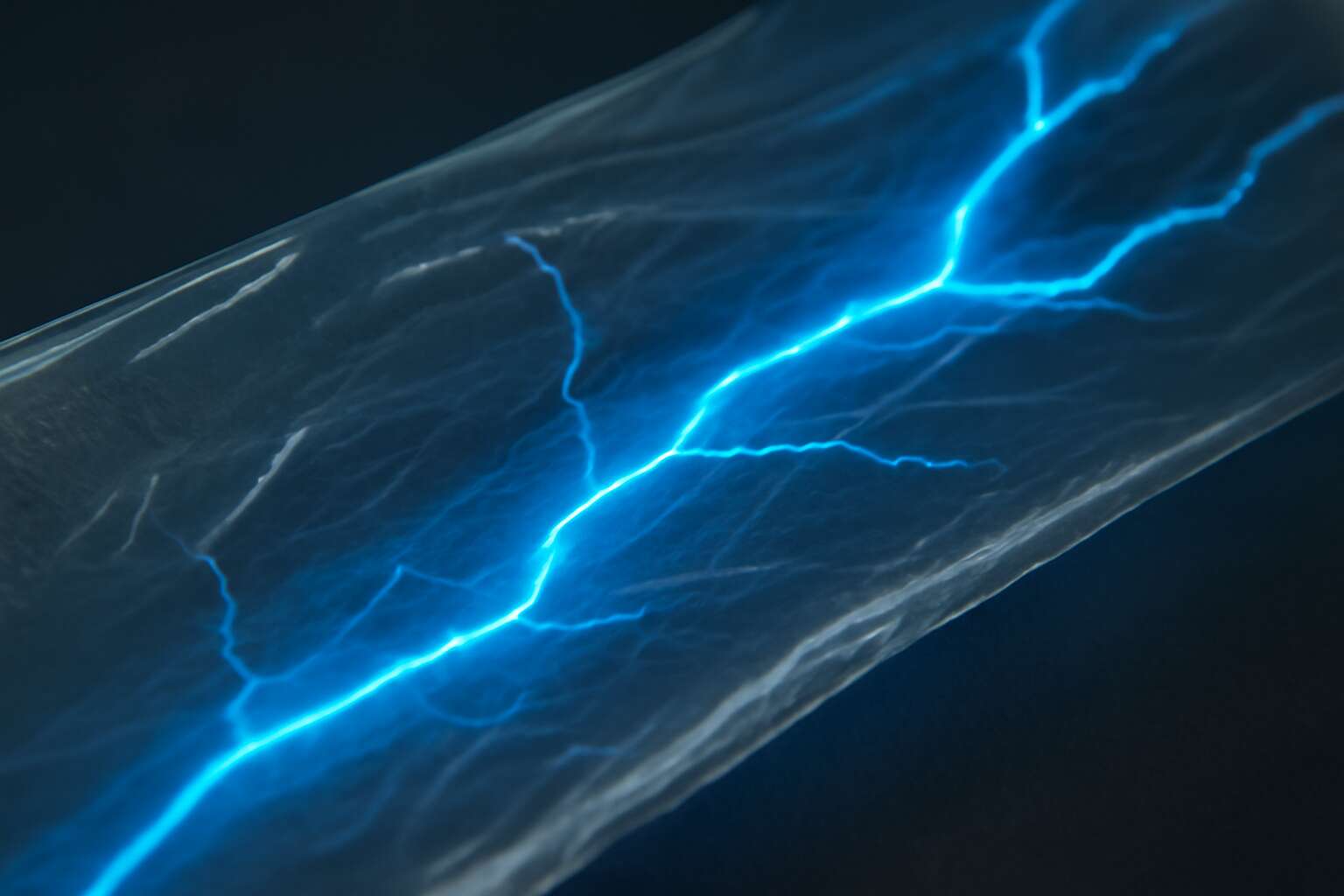
Understanding Conductive Polymers
What Are Conductive Polymers?
“The future of everyday electronics lies in flexible, conductive films,” a leading materials scientist once said. In a world of bendable screens and wearables that cling to the skin, polymer conductors reveal an elegant truth: electricity can travel where rigid metals falter. Understanding Conductive Polymers invites us to glimpse the beauty of chemistry, especially for South Africa’s innovators hungry for accessible brilliance.
What Are Conductive Polymers? They are carbon-based chains whose electrons can move when the backbone is conjugated and tuned by doping. Polypyrrole, polyaniline, and PEDOT:PSS showcase this capacity, blending conductivity with processability and lightness—qualities prized in sensors, flexible circuits, and protective coatings across SA industries.
- Conjugated backbone enables delocalized charge
- Doping tunes conductivity and stability
- Solution processing supports printing and coating
So, can polymers conduct electricity? The answer hinges on design; with the right chemistry, they bend, stretch, and conduct, weaving vitality into devices right here in South Africa.
Key Mechanisms of Conductivity
So, can polymers conduct electricity? The answer hinges on design and the choreography of electrons along a conjugated thread, tuned by doping and architecture. “Electricity travels through a whisper of conjugation,” a leading materials scientist once said, and the line rings true as researchers sculpt films that bend without breaking!
Three key mechanisms weave conductivity into polymer films:
- Conjugation lets electrons roam along the backbone, creating delocalized charge
- Doping introduces carriers and stabilizes the conducting state
- Nano-scale order and processing pathways forge continuous routes for electrons
In South Africa, these mechanisms translate to flexible sensors, wearable interfaces, and printable circuits that sidestep bulky metals. By marrying chemistry with scalable processing, local researchers can tailor conductivity for protective coatings and smart textiles, all while keeping costs down and adaptability high.
As the field matures, the question remains thrillingly simple: design meets discipline, and the chorus of electrons dances through bends, skins, and surfaces across SA.
Intrinsic vs Doped Conductivity
Electricity travels along a whisper-thin conjugated thread, turning possibility into practice. can polymers conduct electricity? Not by chance, but by design: intrinsic pathways in the backbone and the brisk addition of dopants turn steady electron murmurs into a marching chorus.
Two faces of conductivity split in this realm:
- Intrinsic conductivity arises from delocalized electrons along the conjugated backbone, offering a baseline channel.
- Doped conductivity injects extra charge carriers, elevating the material into a higher conduction state.
- Nano-scale order and processing forge percolating networks that maintain continuous routes for electrons.
In South Africa, this chemistry translates to flexible sensors and safe coatings, where routes to conductivity are chosen by printing, weaving, or spraying—crafting percolating networks that bend without breaking. can polymers conduct electricity in real-world films? The answer is a choreography of structure and processing, tuned for local labs and global partners.
Historical Milestones in Conductive Polymers
Electricity in polymers isn’t a fluke; it’s a story of design and discipline. A seasoned chemist once reminded me, “Conductivity is a design choice, not a destiny.” The arc of conductive polymers unfolds as a sequence of deliberate turns—backbone architecture, dopant strategy, and the quiet rise of processing as a performance.
- Late 1960s: polyacetylene’s conductivity revealed through chemical doping.
- 1980s–1990s: polypyrrole and PEDOT breakthroughs improve stability and workability.
- 2000s: printing and flexible circuitry bring polymers into wearable electronics.
In South Africa, these milestones translate to safe coatings, flexible sensors, and coatings that bend without breaking. The practical answer hinges on how networks form in real-world films. So, can polymers conduct electricity? Yes—structure and processing turn a subtle electron murmur into a marching chorus.
Mechanisms Driving Electrical Conductivity in Polymers
Doping and Charge Carriers
In the lattice’s midnight, dopants awaken quiet chains, giving rise to charge carriers and a whisper of conductivity. This raises the question: can polymers conduct electricity in devices we rely on?
Transport wears polarons and bipolarons along the π-conjugated backbone, hopping between chains. The dance hinges on ordering, defects, and the balance between localized motion and occasional band-like flow.
- Doping level tunes carrier density without wrecking film integrity.
- Chain alignment and crystalline pockets boost interchain hopping.
- Disorder versus order governs carrier stability over time.
In South Africa, researchers in Cape Town and Johannesburg chase these shadows, translating quiet chemistry into flexible sensors with a stubborn, cathedral-like resolve. I sense the electrons murmur through the night-woven polymer, both ancient and urgent!
π-Conjugation and Delocalization
A clever twist in the backbone can push a polymer from wallflower to conductor, yet the question remains: can polymers conduct electricity, and under what conditions? Delocalization across π-conjugation lets electrons roam, with charge carriers hitching rides on polarons and occasional band-like glimpses when chains align into orderly packs.
- Extended conjugation and backbone planarity
- Interchain coupling in crystalline pockets
- Disorder versus order shaped by processing
- Optimal doping without compromising film integrity
In practice, processing tweaks—solvent choices, temperature, and drying rate—tune these factors, turning quiet chemistry into measurable conductivity and reliable device performance. In South Africa, researchers in Cape Town and Johannesburg translate this into flexible sensors with stubborn, cathedral-like resolve.
Charge Transport in Film vs. Bulk
From the edge of the lab, a whisper of electrons climbs a polymer spine, drawn by a hidden gravity toward order. When the backbone aligns and chains nestle closer, charge carriers glide through the film with surprising ease, even as the global brood remains restless. The question, can polymers conduct electricity, haunts the lab as a murmur of possibility.
- Interchain coupling strength across packed domains
- Crystallinity, planarity, and local ordering
- Film thickness, drying rate, and aging effects
- Doping balance that preserves film integrity
In thin films, hopping on a two-dimensional lattice often rules; in bulk, a three-dimensional network can unlock band-like transport when order spans many grains. Across South Africa, researchers chase this choreography in labs from Cape Town to Johannesburg, turning quiet chemistry into materials that hum in devices!
Role of Morphology and Crystallinity
Across South African labs, a single crystal whisper guides a bigger question: can polymers conduct electricity? Morphology is the quiet conductor here, shaping how effectively charge hops along chains and how stacking emerges from the backbones. When chains align and packing tightens, electrons find shorter routes and the material behaves more like a conductor than an insulator.
- Interchain packing and crystallinity determine hopping pathways.
- Planarity and local order influence π-conjugation length.
- Film thickness, drying rate, and domain connectivity steer 2D versus 3D transport.
Processing choices in films or bulk then choreograph these motifs, turning quiet chemistry into materials that hum in devices and offer unexpected conductivity even in bendable formats.
Types and Classifications of Conductive Polymers
Polyaniline and Its Derivatives
Polyaniline stands as a chameleon among conductive polymers, its appeal rooted in robustness and the ease with which its properties can be tuned. The question can polymers conduct electricity has a clear answer when doped, as polyaniline demonstrates impressive conductivity alongside stability that resonates in SA labs and industry.
Key oxidation states define the family:
- Leucoemeraldine (fully reduced)
- Emeraldine (half-oxidized)
- Pernigraniline (fully oxidized)
- Emeraldine salt (doped, conductive)
Derivatives and dopant strategies extend processing options, enabling flexible films, fibres, and composites tailored to South Africa’s energy and sensing needs.
Polypyrrole and Poly(3,4-ethylenedioxythiophene) – PEDOT
South Africa’s growing sensor market leans on materials that bend without breaking. Polypyrrole and PEDOT offer stability and tunable conductivity, making them standouts in conductive polymer classifications. This leads to a simple question with real impact: can polymers conduct electricity in practical devices? The answer depends on oxidation state, doping, and how the chains arrange in films and fibers.
Types fall into two main families: Polypyrrole and PEDOT. Within each, the forms are defined by oxidation state and the nature of dopants. Here’s a quick snapshot:
- Polypyrrole: undoped (insulating), p-doped oxidized (conductive), and overoxidized states; dopants tailor film formation and conductivity.
- PEDOT: often used as PEDOT:PSS for easy processing; neutral PEDOT and copolymers broaden processing options while maintaining high stability.
Polyacetylene and Other Conjugated Polymers
In South Africa’s burgeoning sensor market, devices that bend without breaking rewrite reliability. The question—can polymers conduct electricity—lingers in the lab, where a single dopant can turn a ghostly chain into a living conductor. “We bend, we endure,” researchers murmur, and the molecules answer in conductivity.
Polyacetylene is the origin story of conductive polymers, its chains unlocked by doping. Alongside it roam other conjugated polymers—polythiophenes and polyparaphenylene—whose extended conjugation invites charge delocalization. The result: tunable conductivity shaped by oxidation state and chain alignment.
Key families include:
- Polyacetylene
- Polythiophene
- Polyparaphenylene
In this landscape, doping, morphology, and crystallinity sculpt how devices carry charge. The lattice hums, and the future of soft electronics seems written in moving molecules rather than rigid metal traces.
Doped vs Undoped Conductive Polymers
Can polymers conduct electricity? In South Africa’s burgeoning sensor market, doped chains wake up faster than a Durban coffee run. The big split is simple: doped versus undoped—two paths to very different conductance profiles.
They split into two broad classes in practice:
- Doped conductive polymers: charge carriers are injected by dopants, delivering tunable conductivity and higher mobility.
- Undoped (intrinsic) polymers: rely on the polymer’s own structure, offering lower conductivity but greater baseline stability.
In the lab, the choice hinges on the target device—flexible sensors, thin-film transistors, or energy-harvesting elements—and on how dopants align with morphology to answer: can polymers conduct electricity in practice?
Emerging Conductive Polymer Systems
South Africa’s sensor market is growing at a brisk pace, with flexible polymer devices driving a sizable share of new deployments. In this climate, can polymers conduct electricity becomes more than a curiosity—it guides design choices. These materials split into two broad tracks: dopant-assisted polymers that invite charge carriers, and intrinsic backbones whose conductivity arises from their own architecture. For flexible sensors and energy devices, the chosen path shapes stability, processability, and performance.
- Charge-carrier enhanced polymers via dopants, delivering tunable conductivity and mobility
- Intrinsic polymers whose conductivity comes from their own backbones
- Hybrid systems—blends and nanocomposites that merge organic chains with inorganic fillers for tailored performance
Emerging conductive polymer systems—conductive gels, organo-inorganic hybrids, and percolating networks—offer new routes for SA’s sensor landscape. When morphologies align with processing, the chemistry translates into devices that answer the perennial query, can polymers conduct electricity, with grace and reliability.
Applications and Real-World Use Cases
Flexible Electronics and Wearables
Across South Africa’s rural towns, flexible electronics powered by polymers are quietly reshaping daily life. A single thin strip can monitor health, soil moisture, and weather, surviving heat, dust, and rain. The question can polymers conduct electricity, and the answer unlocks devices that bend with the day and stay reliable under field conditions.
- Wearable health monitors in work shirts
- Printed soil sensors for irrigation
- Flexible tagging for the cold chain
Beyond wearables, these materials bring comfort and resilience to the field—gloves that sense grip and temperature, bandage patches that transmit data to a nurse, and small trackers that coach workers through long shifts. In South Africa, such technology promises safer, more efficient supply chains and better health outcomes without demanding new infrastructure.
Sensors and Actuators
Across South Africa’s sun-scorched fields, polymer-powered sensors quietly guide decisions in real time. In trials, real-time data trimmed irrigation waste and boosted safety. So, can polymers conduct electricity, and what does that mean for rugged, everyday sensing?
Applications emerge as sensors and actuators that bend with the day, turning fabric and packaging into responsive tools. Textile skins monitor grip and temperature; smart packaging relays conditions; tiny actuators adjust fit and comfort.
- Textile-integrated safety sensing
- Smart packaging telemetry
- Flexible actuators for adaptive wear
In practice, field-ready systems weave signals into workflows, delivering safer operations, leaner logistics, and healthier communities without reinventing infrastructure. The field speaks softly, yet its data streams are becoming a reliable daily rhythm.
Energy Storage and Conversion
Sun-drenched rooftops and rugged field sites meet their match in flexible energy devices—polymers that power storage and conversion without snapping. For many teams, the question guiding innovation is can polymers conduct electricity and the answer opens doors to safer, lighter power packs that bend with daily life.
In practice, these materials enable field-ready energy storage and conversion with real-world punch:
- Flexible supercapacitors woven into wearables for instant buffering of shocks and bursts of data;
- Thin-film batteries and separators that survive vibration and temperature swings in remote sites;
- Low-profile solar-to-storage devices that turn packaging and textiles into power sources.
From mining corridors to rural clinics, the quiet conductivity of polymers translates into safer logistics, longer-lasting sensors, and lighter gear—without rewriting the grid.
Antistatic and Electrostatic Dissipation Materials
Static shocks cost maintenance teams millions in downtime each year. The question can polymers conduct electricity guides practical choices about safety, weight, and reliability. Designers tailor conductivity through morphology and additives to meet antistatic and electrostatic dissipation needs on shop floors and in the field.
In practice, these materials keep charges from building up where friction and contact are common. Real-world uses include:
- Antistatic coatings for cables and connectors on mining equipment
- ESD-safe packaging films that protect sensitive electronics in transit
- Conductive fabrics and PPE for field workers to prevent static build-up
Across South Africa’s remote sites and urban warehouses, antistatic polymers reduce dust ignition risks and protect sensors. They enable lighter PPE and gear that withstand vibration and temperature shifts without losing performance.
Synthesis, Processing, and Performance Enhancement
Polymer Synthesis Routes for Conductivity
On the frontier of flexible electronics, the performance gap often comes down to synthesis tempo. In South Africa’s labs and beyond, a single tweak in how the polymer is built can swing conductivity dramatically. The burning question can polymers conduct electricity? The answer hinges on routes, timing, and the careful choreography of structure and impurities that enable charge flow to travel unimpeded.
Polymer Synthesis Routes for Conductivity offer several cleanly defined paths that avoid guesswork. The main approaches include:
- Electrochemical polymerization for thin, conformal films
- Chemical oxidative polymerization with precise dopant control
- In-situ polymerization during device fabrication for integrated interfaces
Processing choices and performance enhancements follow, turning insight into device reality. Post-treatment annealing, solvent-vapor control, and chain alignment sharply sharpen charge transport in films, while nanostructuring and interfacial engineering reduce traps. The synthesis route sets the stage; processing performs, and together they push devices closer to practical limits.
Doping Strategies and Counter Ions
In flexible electronics, small synthesis tweaks can swing conductivity by two to three times. From the outset, synthesis sets the ceiling. Electrochemical polymerization yields thin, conformal films with clean dopant integration. The question can polymers conduct electricity? The answer hinges on how the backbone is built and the residues that ride along.
Processing decisions sharpen that potential. Post-treatment annealing, solvent-vapor control, and deliberate chain alignment unlock faster charge transport. Short, targeted steps reduce traps and promote smoother pathways. Key levers appear in a compact list for teams aiming at repeatable results:
- annealing windows
- solvent-vapor exposure control
- interfacial stacking optimization
Performance hinges on doping strategies and counter ions. Choosing dopants that complement the polymer, balancing charge density with mobility, and managing counter ion size and hydration all steer conductivity. When harmonized, these choices translate into steadier, more reliable devices rather than fragile lab curiosities.
Processing Techniques to Improve Conductivity
Synthesis isn’t just chemistry; it’s architecture. The backbone is the highway, and the residues along the chain can speed or slow charge transport. Electrochemical polymerization yields thin, conformal films with clean dopant integration, setting the ceiling for performance before processing begins. The timeless question—can polymers conduct electricity?—depends on how the backbone is built and the residues that ride along.
Processing choices turn potential into real-world performance. Post-treatment annealing, solvent-vapor control, and deliberate chain alignment tame traps and smooth charge pathways. Short, focused steps boost mobility without bloating defects, keeping devices repeatable from lab benches to production lines—even in South Africa’s bustling tech scene.
Performance hinges on harmonizing synthesis with smart doping and counter ions. The right pairings balance charge density with mobility, while ion size and hydration tune how charges hop along the chain. When these elements align, conductivity stays steady and predictable, ready for devices rather than fleeting lab demos.
Characterization Methods for Conductivity
“Charge moves fastest when the backbone is a highway,” declares a polymer sage. The can polymers conduct electricity question hinges on how synthesis hones the backbone and the residues along for the ride.
Synthesis shapes conductivity by choosing the core chain and how dopants join. Electrochemical polymerization yields thin, conformal films with clean dopant integration.
Processing—annealing, solvent-vapor control, and chain alignment—turns potential into performance. Short, controlled steps reduce traps and keep devices repeatable, even in South Africa’s bustling tech scene.
Characterization methods for conductivity bridge synthesis and performance; that question, can polymers conduct electricity, finds its answer in the measurement suite. Techniques include:
- Four-point probe for bulk conductivity
- Impedance spectroscopy for transport dynamics
- GIWAXS/AFM mapping of morphology with conductivity
Future Directions and Research Trends
From core-chain selection to residue tuning, synthesis writes the rules of conductivity. When the backbone is forged with precision, charge finds a smoother passage. This begs the question: can polymers conduct electricity in practical devices? The answer unfolds like a dimly lit map—revealing how bonds, side chains, and dopants choreograph the flow of carriers beneath the surface.
Processing—annealing, solvent-vapor control, and careful chain alignment—carves out traps and unlocks repeatable behavior. In South Africa’s tech corridors, disciplined processing translates potential into durable, scalable films that endure real-world wear. The interfaces and morphologies become the quiet engines of steady current, even as markets pulse forward.
Future directions promise performance enhancements through hybrid systems, sustainable dopants, and data-guided design. Researchers seek longer lifetimes, roll-to-roll compatibility, and morphologies that resist fatigue. The arc bends toward polymers that rival metals in flexibility and energy storage, while preserving the mystery that drew explorers to the field.




0 Comments